Journal / Colored Birthstone
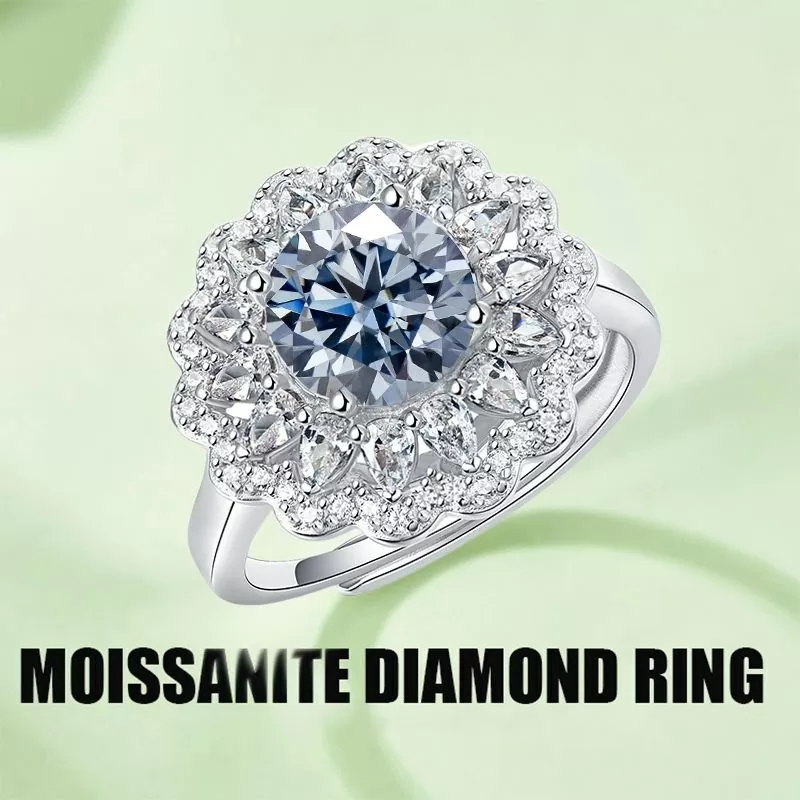
Birthstone Ring Metal Tone Pairing
A buyer in San Diego commissioned 30 ruby birthstone rings in white gold and had 8 returned because the stones looked pink rather than red once they were set.
A colored stone does not sit in a neutral frame. The metal behind and beside it reflects into the pavilion, and the tone of the metal shifts the perceived color by a full grade in some combinations.
[1]Why the metal changes the stone
A white metal reflects a cool light into the stone's pavilion, which lifts blue and violet and drops red. A yellow metal reflects warm light, which lifts red and yellow and drops blue.
The effect is strongest on stones with high transparency and a light tone, and weakest on opaque stones with a dark tone. A translucent ruby at medium tone is the case where the shift is most visible.
| Stone | Yellow gold | White gold | Rose gold |
|---|---|---|---|
| Ruby medium | Richer red | Pink cast | Warm red |
| Sapphire blue | Green cast | Cleaner blue | Violet cast |
| Emerald green | Warm green | Cool green | Muted green |
| Amethyst | Warm violet | Cool violet | Pink violet |
| Citrine | Deeper amber | Pale yellow | Orange |
The table describes tendency rather than rule, and it assumes a stone with enough transparency to show the reflection. An opaque stone sits on the metal rather than in it.
[2]The three pairings that work
Blue stones with white metal, red and orange stones with yellow, and pink stones with rose. Those three pairings reinforce rather than fight, and they are the safest starting point for a birthstone line.
A buyer who wants a contrast rather than a reinforcement pairs a blue stone with yellow gold, which produces a green cast that reads as a different color rather than a mistake.
[3]What the setting does to the effect
A bezel surrounds the stone with metal and reflects it into the pavilion from every side, which doubles the metal's influence. A prong setting leaves the stone open and the shift drops by half.
That is why the same stone in a bezel and in a prong can read as two different colors, and why a birthstone line should decide the setting before the metal.
[4]The photograph problem
A stone photographed on a white background reads cooler than the same stone on a hand, because the background reflects into the stone the same way metal does. A buyer approving a stone from a photograph is approving a color that the setting will change.
The fix is to photograph the stone in the actual setting, or to approve a sample ring rather than a loose stone.
[5]Metal that cannot be recolored
A plated white gold ring can be re-plated to a warmer white or a cooler white, which gives a buyer one adjustment after the fact. A yellow gold ring cannot be made white without rhodium, and a rose gold ring cannot be made yellow.
That asymmetry means the metal decision should be made first and the stone chosen against it, not the other way round.
[6]What we do
We photograph the stone set rather than loose, quote the metal against the stone's tone, and default to a prong setting when the stone's color is the design intent. Buyers can request a sample ring in the proposed metal before the run.
Minimum order is 50 pieces per design and sizes can be mixed. Sample lead time is around 20 days from approved CAD, bulk 25 to 30 days, and stock designs ship in 15 to 20 days under 500 pieces. Payment is a 30 percent deposit with the balance before shipment, by T/T, PayPal or Western Union.
[7]The stone that changes in the box
Box against hand
A colored stone looks different in a box than on a hand, and the box is where a buyer approves it. The satin interior reflects white light and the skin reflects warm light, and the two readings differ by a tone.
A buyer who approves in a box and delivers on a hand will see a color complaint that is not a defect. Approving on a hand, under daylight, removes the difference before the order rather than after.
Daylight matters too: a stone read under a warm store lamp shifts yellow and a stone read under LED shifts blue.
[8]Hardness against setting depth
Setting by hardness
A birthstone has a hardness between 5 and 9 and the setting has to respect it. An emerald at 7.5 chips at the facet edges, so a bezel that protects the rim is safer than a prong that exposes it.
A ruby at 9 tolerates a prong setting and a thin rim, which is why a ruby can be set with a lower metal presence and still read protected.
The pairing logic therefore runs in two steps: the metal by the stone's tone, then the setting by the stone's hardness.
[9]The line that repeats a palette
A birthstone line with twelve stones needs a metal that reads across all twelve, and no single metal does. A white metal reads clean on five stones and cold on four, and a yellow reads warm on eight and wrong on three.
The usual answer is a white metal for the line and a colored stone that works in white, which pushes the palette toward blues and greens rather than reds.
A buyer who wants a twelve stone line should either accept that palette or carry two metals, and the second option costs a second setting run.
[10]What the customer actually sees
A customer compares the delivered ring to the product image, and the image is the reference rather than the stone. That is why a set photograph is worth more than a stone certificate for a colored stone product page.
The image should be shot on skin under daylight with the actual metal, and it should show the stone at the size the customer will receive rather than enlarged.
A buyer who supplies a set image reduces color returns to almost zero, because the customer's expectation is set by the same image the order was based on.
[11]What a two metal run costs
A second metal adds a plating line, a second quality check and a second photograph set, which on a 50 piece run is about 12 percent of the unit cost. That is cheap against a color return rate that runs near 15 percent.
The arithmetic reverses on a 500 piece run, where a single metal amortises the setup and a second metal does not. The line should carry one metal at volume and two at the start.
[12]The certificate that helps a color sale
A colored stone certificate states tone and saturation in words, and those words are the closest thing to a color standard a buyer has across a supplier. It does not replace a set photograph, and it does help a claim.
A buyer who buys on certificate alone buys a grade rather than a look, and the customer buys the look. Both are needed and they answer different questions.
[13]The anniversary band with several stones
A band with three stones from three birth months needs one metal that works with all three, and the stone with the strongest tone wins the decision. A deep blue beside a pale yellow reads as a blue ring with a yellow stone.
Ordering the stones by tone rather than by date is the design fix, because the eye reads the center stone first and the neighbors as support.
A buyer who insists on a date order should accept that the tone relationship is whatever the months produce.
[14]The tone that shifts with the light
A birthstone reads differently under a shop light and daylight, and a metal tone that matches under one can clash under the other. A warm stone on white gold cools under daylight and a cool stone on yellow warms.
A buyer choosing a tone from a single photo is choosing the shop light rather than the stone. Two photos, one in daylight, settle the match.
[15]Frequently Asked Questions
Does metal color change a gemstone?
Yes, by up to a grade in tone on a translucent stone. White metal cools the color and yellow warms it.
Which metal suits a ruby?
Yellow or rose gold, because both reinforce the red. White gold pushes a medium ruby toward pink.
Is bezel or prong better for color?
Prong, if the stone's color is the priority. A bezel surrounds the stone with metal and doubles the metal's influence.
Should I approve the stone loose or set?
Set. A loose stone on a white background reads cooler than it will on the hand.
[16]Next step
Send the stone's tone and the metal you are considering, and we will quote the pairing and the setting. See colored stone work in the archive, read the journal on stone tone, or open a brief on the contact page.