Journal / Colored Birthstone
Stud Earrings Wholesale: First-Order Landed Cost Math
[1]Why the unit price on the quote is not your cost
Most buyers open a stud earrings wholesale negotiation by comparing the number at the bottom of the page. That number is the ex-works price, and it tells you almost nothing about what a pair costs once it is in your warehouse in Ohio or Rotterdam. I have watched first orders go sideways because the buyer budgeted on FOB and then got hit by duty, broker fees and a re-plating batch. So let us do the math the way I do it on the floor, with real line items.
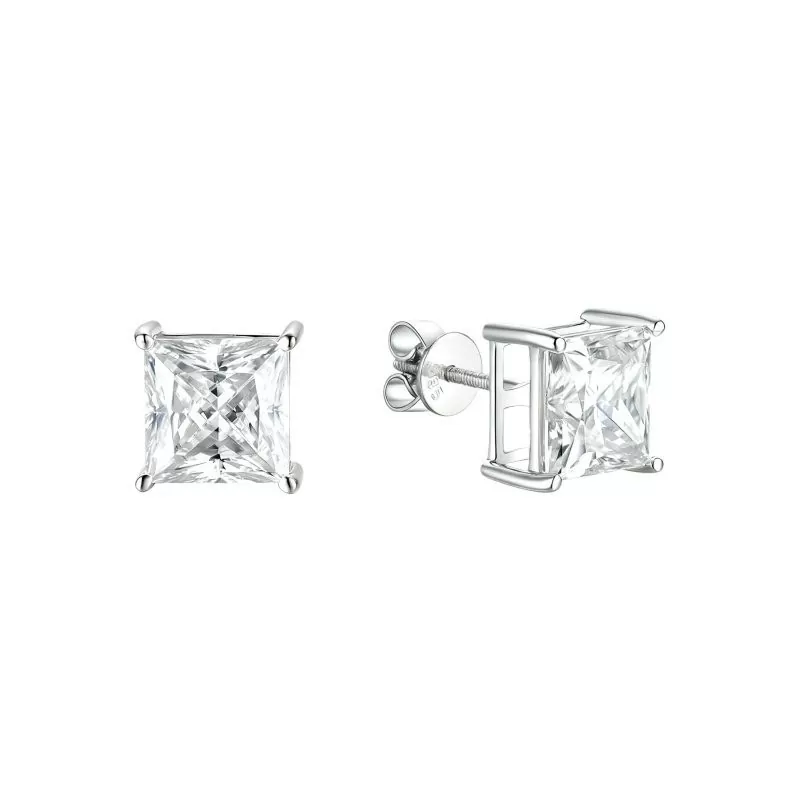
Below is the structure I walk every new buyer through. The figures are illustrative for a 4mm round brilliant moissanite stud in 925 silver, rhodium plated, prong set, with butterfly backs. Swap in your own spec and the proportions hold.
[2]The six cost lines that make up one pair
Every stud earring has the same skeleton. What changes is the grade of each part. Here is how a pair at roughly 500 pairs per style breaks down before freight.
| Cost line | What it covers | Share of unit cost | Where buyers get burned |
|---|---|---|---|
| Stones | Two moissanite or lab-grown diamonds, matched in color and size | 30 to 45 percent | Mismatched pairs from mixed stone lots |
| Metal | 925 silver posts, baskets, backs, plus casting loss | 25 to 35 percent | Silver price moving between deposit and ship date |
| Labor | Setting, soldering, polishing, pairing | 12 to 18 percent | Hand-setting on prongs too thin to hold |
| Plating | Rhodium or 18k gold over silver | 5 to 9 percent | Thin plate that wears through in weeks |
| Certificates and packaging | GRA card per pair, IGI for stones above threshold, pouches, boxes | 4 to 8 percent | Certificate serials not matching the stones shipped |
| QC and admin | Inspection time, sorting, export paperwork | 3 to 6 percent | No pre-ship AQL, so defects arrive with you |
Notice that stones and metal together are 60 to 75 percent of the cost. That is why a quote that is 30 percent cheaper than everyone else is almost never a labor saving. It is a thinner basket, a lower grade stone, or a plating layer measured in microns you can count on one hand.
[3]Stone grade is the biggest lever, and the easiest to hide
Moissanite is graded loosely in the trade and buyers get confused by the letters. In practice we work with two bands: a standard band where color sits in the near-colorless range with a slight warmth under daylight, and a premium band that is colorless by eye with tight cut precision. The price gap between those bands is real, and it shows up on camera and under jewelry-store lighting.
For lab-grown diamonds the grading bodies matter more. IGI reports carry the 4Cs and a laser inscription, and buyers in the US and EU expect to see the report number matched to the stone. GRA cards come with moissanite and are useful for retail storytelling, but they are not a grading lab in the same sense. If a supplier tells you a GRA card is equivalent to an IGI report, that is your signal to slow down.
What matching actually costs
A pair of studs is judged as a pair, not as two singles. We pull stones from the same parcel and match on millimeter diameter, color, and table reflection before they ever reach the setter. That matching step adds a small labor cost and cuts yield, but it is the difference between a pair that sells and a pair that gets returned. Some factories skip it and match at packing, which is why you occasionally see a stud with a slightly duller neighbor.
[4]Freight, duty, and the DDP shortcut
Once goods leave, you have three moving pieces: freight, insurance, and import duty plus VAT. Air express on a first order of a few thousand pairs is usually a modest per-pair add, and ocean only makes sense once you are shipping volume you can plan months ahead for.
Duty rates depend on your destination and the declared material and value. Silver jewelry and lab-grown stones land in different tariff buckets than base metal costume pieces, and misclassification is a common and expensive mistake. This is where DDP helps first-time buyers: the freight forwarder handles clearance and duty, and the goods arrive at your door with nothing left to pay. Our DDP delivery runs 5 to 8 days door to door on typical first orders.
Rule of thumb from twelve years of shipping: add 8 to 14 percent of your ex-works value for freight, insurance and duty on a first air shipment. If your landed number is more than 20 percent above ex-works, check the classification before you blame the factory.
[5]A worked example, pair by pair
Take 500 pairs of 4mm moissanite studs in rhodium-plated silver. Suppose ex-works lands at a given unit price. Stones and metal eat most of it. Certificates, pouches and boxes add a few cents. Then freight and duty add the percentage above. Divide the total by 500 and you have your true landed cost per pair, which is the only number that should drive your retail price.
Now run the same math on a 200-pair order. The unit price barely moves, but freight per pair climbs sharply because you are paying the same base rate on a smaller shipment. This is the single most common first-order surprise, and it is why I tell buyers to think about order size in landed terms, not ex-works terms.
Why our numbers run about 20 percent better
We are the factory, not a trading company reselling someone else's line. Stones come from our own cutting supply, silver casting happens in house, and plating and QC sit under one roof. There is no intermediary margin, no second set of shipping documents, and no waiting for a third party to answer a question about a defect. That structure is why our cost, speed and yield typically run about 20 percent better than a typical trading company on the same spec.
[6]Payment terms and what a first order actually looks like
For stock items the minimum is 1 piece, which lets you sample without committing to a full run. Custom studs start at 30 pieces per style and colorway, with production at 12 to 18 days after deposit and artwork approval. Payment is T/T with 30 percent deposit and balance before shipment, and PayPal is fine for sample orders.
QC runs in three stages: an incoming check on every stone lot, in-process inspection during setting and plating, and a pre-ship AQL sampling against your approved sample. Certificates are issued per your spec, GRA cards for moissanite and IGI reports where lab-grown diamonds are involved. If something fails AQL, it does not ship, and you hear about it from me before you hear about it from your customer.
- MOQ: 1 piece for stock, 30 pieces per style for custom
- Production: 12 to 18 days after deposit
- QC: incoming stone check, in-process, pre-ship AQL
- Certificates: GRA for moissanite, IGI for lab-grown diamonds
- Payment: T/T 30 percent deposit, PayPal for samples
- Delivery: DDP, 5 to 8 days door to door
[7]Frequently Asked Questions
What is the minimum order for stud earrings wholesale?
Stock designs ship from 1 piece, so you can order samples or test a style before committing. Custom studs require 30 pieces per style and colorway, with production at 12 to 18 days after deposit and sample approval. Price is quoted per pair ex-works, with freight and duty added at the landed stage.
How long does a first order take from deposit to delivery?
Production runs 12 to 18 days depending on setting complexity and plating finish. Add 5 to 8 days for DDP delivery to your door. Samples paid by PayPal usually move faster because there is no deposit paperwork to clear.
How is the price calculated, and can I see the breakdown?
Quotes are built per pair from stone grade, metal weight, labor, plating thickness, certificates and packaging. Ask for the line-item breakdown and we will send it with the quote so you can compare against other suppliers on the same spec. Price basis is per pair, ex-works, with freight and duty quoted separately or bundled under DDP.
Send your spec, target quantity and destination zip or postcode to service@holycome.com or WhatsApp +86 133 7744 7107, and I will come back with a landed cost per pair and a sample plan you can approve in one pass.