Journal / Mens Custom Jewelry
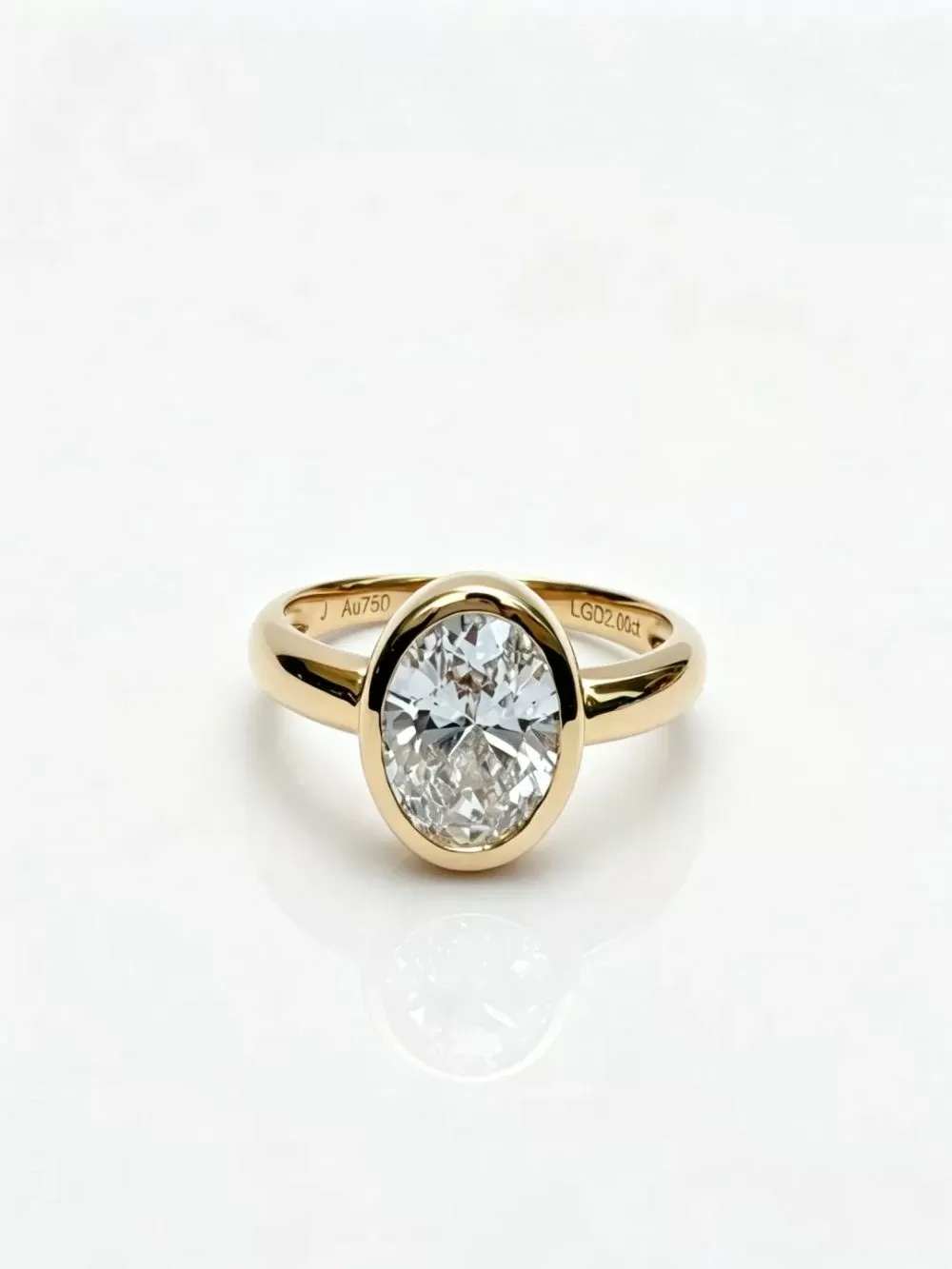
Signet Ring Crest Carving Depth in CAD
A buyer in Chicago commissioned 60 signet rings with a family crest and rejected the first run because the carving disappeared after polishing. The crest had been modelled at 0.25 mm relief, which looked correct in a render and was almost gone once the surface was finished.
Crest carving is a depth problem before it is an art problem. A mark that reads at arm's length needs a relief the finishing process cannot remove.
[1]What determines whether a crest survives
Three numbers: the relief depth, the bevel angle on the carved edges and the amount of metal the finishing step removes. Get the third wrong and the first two do not matter.
Polishing removes 0.05 to 0.15 mm from a flat face depending on how aggressive the finish is. A 0.2 mm relief is therefore at risk, and a 0.4 mm relief is safe on the same process.
Working depth by crest type
The relief needed depends on the crest's complexity rather than its size. A monogram needs less depth than a shield with a bend and three charges, because the eye reads a monogram from its outline and a shield from its internal detail.
| Crest type | Minimum relief | Note |
|---|---|---|
| Single initial | 0.25 mm | Reads from outline |
| Three letter monogram | 0.30 mm | Overlap needs depth |
| Shield, simple | 0.35 mm | Charges need relief |
| Shield with detail | 0.45 mm | Detail erodes first |
| Full achievement | 0.55 mm | Use a larger face instead |
The last row is the one buyers resist. A full achievement with supporters and a motto cannot be cut at 0.55 mm on a 12 mm face and still read. The answer is a larger face or fewer elements, not a deeper cut.
[2]Bevel angle and edge quality
A carved edge with a vertical wall casts no shadow and reads as a flat area. A bevel of 25 to 35 degrees catches light and gives the crest its outline. Below 20 degrees the edge looks soft, and above 45 degrees the wall becomes a step the polishing mop cannot reach.
The bevel is also what the mould can reproduce. A cast signet reproduces a bevel better than a vertical wall, because a vertical wall creates a sharp corner that the investment sometimes fails to fill.
Where the bevel goes
On the outer edge of every raised element, and on the inner edge of every recessed line. That means two edge angles per element, and the CAD has to carry both or the carving reads as a silhouette.
[3]Casting versus hand engraving
A cast crest is reproduced from the master model, so every ring in the run is identical. A hand-cut crest is cut after casting, so each ring differs slightly and the cost scales with the piece count.
For 50 to 500 pieces the cast route is the practical one, and the master has to be cut deep enough that the reproduction still reads after finishing. That is the single most common failure in this category.
What the master should carry
The master is cut at 1.15 to 1.25 times the finished relief, because casting shrinkage and polishing both reduce it. A master cut to the finished dimension produces a run that is shallower than the drawing states.
[4]Weight and balance on the face
A crest sits on a face that also has to carry the ring's weight. A heavy ring with a thin face looks wrong, and a light ring with a thick face feels top-heavy.
The working relationship is a face thickness of 1.1 to 1.3 mm on a ring of 8 to 12 g, and 1.4 to 1.6 mm above 14 g. Below 1.0 mm the face distorts during polishing and the crest flattens with it.
A face above 1.6 mm on a light ring reads as a plate rather than a signet, and it also makes the ring sit high on the finger. Buyers chasing weight for its own sake should add it at the shoulders rather than at the face.
[5]Face size and crest scaling
The face sets the limit on how much crest can be carried. A 12 mm face holds a monogram comfortably and a shield with three charges tightly. A 14 mm face holds a full shield with a motto. A 10 mm face holds an initial and nothing more.
Buyers often ask for a 10 mm face and a complex crest, and the answer is that the detail would have to fall below the working relief to fit. The choice is between a larger face and a simplified crest, and both are better than a shallow cut.
How a crest is simplified
Simplification is not a compromise on identity. It means removing the elements that read at print size but not at arm's length: hatch marks, tiny charges, the loops of a script letter. What remains has to be legible at 300 mm.
[6]Mould making and reproduction checks
The master carries the crest and the mould carries the master. A mould that does not fill at the bevel produces a ring with a rounded edge, which reads as a worn crest from the first day.
The reproduction check is a single cast piece measured against the drawing: relief at three points, bevel angle at two, and face flatness. That check happens before the run, and it is the step that prevents a rejected batch.
What fails in reproduction
Two failures dominate. A bevel below 20 degrees that the investment cannot fill, and a face that is too thin and warps during the cast. Both show up in the single-piece check and neither shows up in a render.
A third failure is shrinkage drift across a long run: the first pieces match the drawing and the last pieces are 0.05 mm shallower. Measuring one piece at the start and one at the end catches it, and stopping the run to re-cut the mould is cheaper than replacing the batch.
[7]How we specify a signet
We ask for the crest artwork as a vector file, the face size, the ring weight target and the intended finish. From those we set the relief, the bevel and the master scale, and we return a render with the crest at finished depth rather than at master depth.
Where the artwork is a photograph or a scan of an existing ring, we redraw it as vector and confirm the simplified form before cutting the master. A scan cannot be reproduced as a cast crest without that redraw step.
The approval render
The approval render should show the crest under a raking light, because raking light is what reveals relief. A render lit from the front makes a shallow crest look deep, which is how the Chicago run was approved.
[8]Cost
A signet programme costs a master cut per crest, which is a fixed charge, plus the rings at their weight. The master cut is the expensive part and it is paid once, so a second crest on the same face is cheaper than the first.
Buyers who need several crests across a family or a club should group them on one face size, because the tooling then carries across the group and the per-crest cost falls with each addition.
What drives the per-piece cost
Weight, finish and crest depth. A deeper crest adds machining time on the master only, not on the piece, so the per-piece cost moves with weight rather than with complexity.
[9]What the wax reveals about the crest
A wax trial shows the crest at the size it will be worn rather than at the size it was drawn. A crest that reads on a 4x render can disappear on a 12 mm face at arm's length.
The wax is also where the face thickness is felt. A face that is 1.0 mm thick feels sharp at the edge, and a face at 1.3 mm feels substantial. That is a judgement the buyer makes in the hand, not on a screen.
A wax trial costs a fraction of a master cut and it is the last point where a face size can change without re-cutting the master.
[10]Frequently Asked Questions
How deep should a signet crest be?
Between 0.25 mm for a single initial and 0.55 mm for a detailed shield. The figure depends on how much internal detail the crest carries rather than on the face size.
Will the crest wear away over time?
Not at 0.35 mm or above on a normal wear cycle. A crest at 0.2 mm can soften within a few years of daily wear and refinishing.
Can an existing signet be reproduced?
Yes, from a scan plus a redraw. The redraw is required because a scan captures the worn surface rather than the intended form.
Is hand engraving better than casting?
For a single ring, hand engraving gives a sharper edge. For 50 pieces and above, casting gives consistency and the master can be cut to compensate for finishing loss.
[11]Next step
Send the crest as vector artwork and the face size, and we will return a relief specification and an approval render lit for depth. See signet work in the archive, read the journal on men's band profiles, or open a brief on the contact page.