Journal / Ring Size Fit
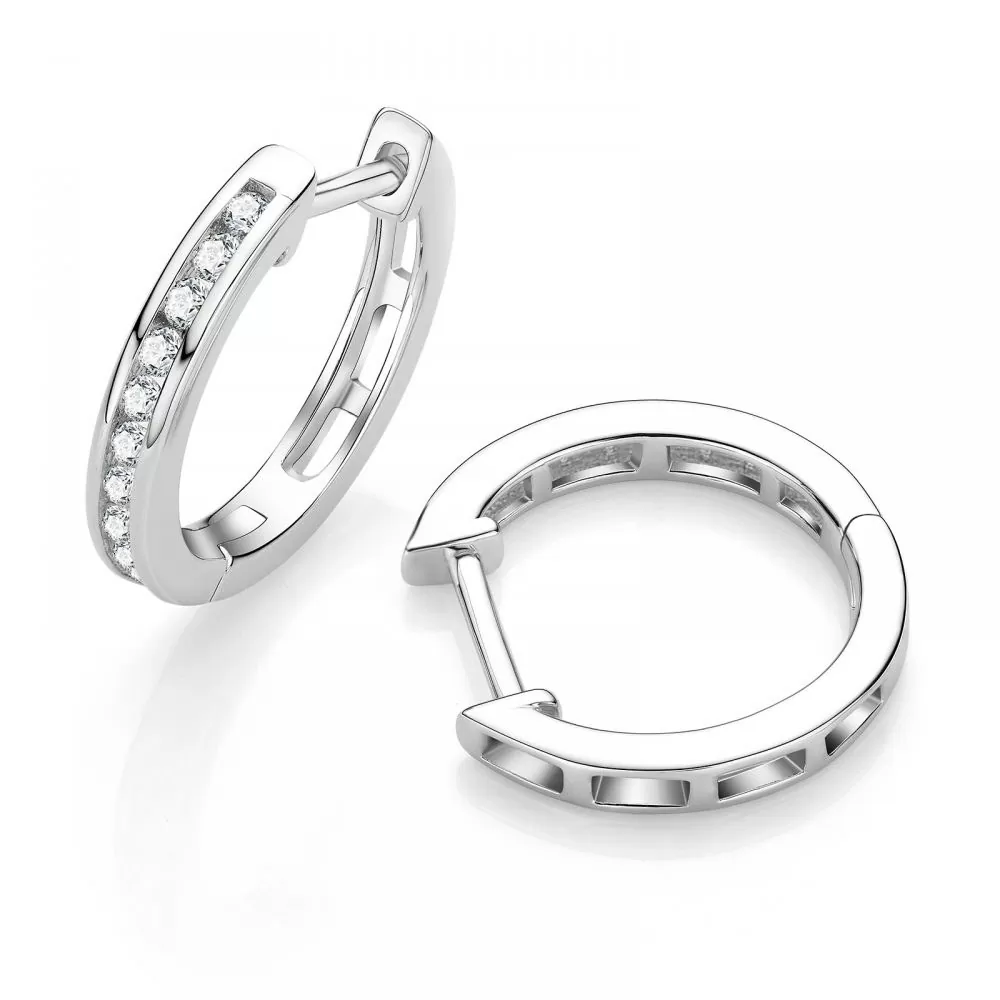
Ring Size and Finger Temperature
A buyer in Minneapolis measured a size 5.5 at home in February and ordered a 5.5, then returned 9 of 60 rings in July because they would not pass the knuckle on a warm hand.
Finger size is not a constant. It changes with temperature, with the time of day, with salt and with the hand's own activity, and a measurement taken once is a measurement taken at one condition.
[1]How much temperature moves a size
A finger can differ by a quarter to a half size between a cold room and a warm one, because the soft tissue responds to blood flow rather than to bone. The knuckle is the part that changes most, since it is where the tissue is thickest.
A half size is about 0.4 mm on diameter, which is the difference between a ring that passes the knuckle and one that does not. That is the whole margin in a typical custom order.
| Condition | Change | Direction |
|---|---|---|
| Cold room, 15 C | -0.25 size | Smaller |
| Warm room, 25 C | +0.25 size | Larger |
| After exercise | +0.5 size | Larger |
| Early morning | -0.25 size | Smaller |
| High salt meal | +0.25 size | Larger |
The table is a working range rather than a physiological rule. The useful conclusion is that a single measurement has an uncertainty of about half a size, and the order should be placed at the middle of that range.
[2]When to measure
The best time is mid afternoon in a room at normal temperature, with the hand at rest for ten minutes. That condition sits near the middle of the daily range and produces a measurement that fits most of the time.
A morning measurement trends small and an evening measurement trends large, which is why two measurements at different times are more useful than one careful one.
The two measurement method
Measure in the morning and again in the afternoon on the same day, then order the average. If the two differ by more than half a size, the finger is unstable and the order should use the larger number with a note about the knuckle.
A finger that differs by a full size across a day usually has a knuckle that is larger than the base, which is a fit problem rather than a measurement problem.
[3]The knuckle problem
The ring has to pass the knuckle and sit at the base, and those two diameters are rarely the same. A ring sized to the base will not pass a larger knuckle, and a ring sized to the knuckle will rotate at the base.
The standard solution is to size to the knuckle and accept a slight rotation, or to choose a narrower band that passes more easily. A wide band on a prominent knuckle is the combination that returns most often.
[4]Salt, alcohol and travel
A high salt meal, alcohol and long flights all shift fluid balance and move a finger by up to half a size for a day. A measurement taken after a flight is a measurement taken in a swollen state.
A buyer ordering at a trade show after a flight should measure the following morning rather than on arrival. That single delay removes the most common sizing error in bulk orders placed at shows.
[5]Why a bulk order needs a size set
On a 50 piece run the sizes are distributed rather than single, and the distribution has to be based on a measured sample rather than on a guess. Ten measured fingers from the target market give a better curve than a national average.
A run that follows a national average will be short in the middle sizes, because a boutique's customers are not a national sample. The measured sample costs a day and prevents a broken size run.
[6]What to specify on the order
Three items: the measurement condition, the time of day and the knuckle diameter if it differs from the base. A work order with those three lets a bench decide whether to add a quarter size rather than guess.
A bench that receives only a number will cut to that number, and a number without a condition is a number that will be wrong for half the year.
[7]What we do
We ask for two measurements at different times, the knuckle diameter when it differs, and the band width, then quote the size that sits at the middle of the range. On bulk runs we build the size curve from a measured sample rather than from an average.
Minimum order is 50 pieces per design and sizes can be mixed. Sample lead time is around 20 days from approved CAD, bulk 25 to 30 days, and stock designs ship in 15 to 20 days under 500 pieces. Payment is a 30 percent deposit with the balance before shipment, by T/T, PayPal or Western Union.
[8]The measurement tools that actually work
Three tools are worth having: a set of metal sizing rings, a printable gauge strip and a caliper. The sizing rings are the most reliable because they reproduce the feel of a ring rather than a diameter on a ruler, and the caliper is useful only for measuring an existing ring.
A printable strip is accurate to about half a size after printing at 100 percent, and a strip printed at a default scale is wrong by 5 to 10 percent. That single error explains most of the mismatch between a home measurement and a delivered ring.
The caliper reading
A caliper measures an existing ring's inside diameter, which is the most precise number available when the customer has a ring that already fits. The conversion from inside diameter to size is a table rather than a calculation.
[9]The ring that already fits
The fastest reliable method is to measure a ring the customer already wears on that finger, using its inside diameter rather than its stamped size. A stamped size drifts after a re-size and a diameter does not.
A worn ring also carries the wear pattern of that finger, so a ring that fits comfortably is a better reference than a new one that was bought online. The fit is the information and the stamp is only a label.
A caliper reading to 0.1 mm converts to a size within a quarter size, which is better than any printed strip and it takes a minute.
[10]The half size question
Where half sizes stop
Half sizes exist in most markets and are the practical answer to a finger that sits between two whole sizes. A ring cut to a whole size on a finger that measures between them will either bind or rotate.
Some bands cannot be made in a half size without a re-cut, particularly an eternity band where the stones are set around the full circumference. In that case the choice is a whole size up with a comfort fit profile rather than a half size that requires a re-cut.
The half size is also where most returns cluster, because a buyer who measures at the boundary tends to round down. Rounding up at the boundary removes that cluster.
[11]What a sizing set costs against a return
A sizing set costs less than two returned rings, which is the entire business case for keeping one at a retail counter. The set also removes the argument about who measured wrong, because the measurement becomes a shared act rather than a claim.
On a wholesale order the equivalent is a measured sample of ten fingers from the buyer's own customers. That sample costs a day of staff time and it sets the size curve for the whole run.
Both versions of the same idea reduce returns by removing the estimation step, and estimation is where the returns come from.
[12]Frequently Asked Questions
Does finger size change with weather?
Yes, by a quarter to a half size between a cold room and a warm one. Two measurements at different times give a size that fits across the range.
When is the best time to measure a ring size?
Mid afternoon at normal room temperature, with the hand at rest. Morning reads small and evening reads large.
Should I size to the knuckle or the base?
To the knuckle, so the ring passes. A slight rotation at the base is preferable to a ring that will not go on.
Why did my rings fit in winter and not in summer?
The finger expanded with the warmer temperature and the knuckle grew first. A half size difference is enough to change the fit.
[13]Next step
Send two measurements from different times and the band width, and we will quote the middle size. See sizing work in the archive, read the journal on wide band sizing, or open a brief on the contact page.