Journal / Mens Custom Jewelry
Pendants Wholesale: First-Order Landed Cost Math
[1]Why the First Pendant Order Rarely Costs What the Quote Says
I have sat in on hundreds of first-order cost reviews, and the same thing happens almost every time. The buyer compares three unit prices, picks the middle one, then gets a freight invoice and a duty bill that push the real cost per piece 25 to 40 percent above the number they budgeted.
Unit price is not your cost. Landed cost is. For a first pendants wholesale order, landed cost is the only figure that lets you set a retail price and still sleep.
Below is how I walk a buyer through it, using real line items from our floor rather than nice round numbers.
[2]The Five Cost Buckets on Any Pendant
Every pendant we ship breaks into five cost buckets. Miss one and your margin math is fiction.
- Stone cost: moissanite, lab-grown diamond, or CZ, priced per carat by size and clarity grade.
- Metal cost: 925 silver priced by gram weight, plus a small casting and polishing charge.
- Plating cost: rhodium, 14K gold, or 18K gold over silver, priced per piece and per micron.
- Labor and setting: prong, bezel, or pavé setting time, which scales with stone count far more than stone size.
- Logistics and compliance: freight, duty, certificates, and payment fees.
Notice that three of the five are driven by physical measurements you can ask for before you commit: gram weight, stone carat weight, and plating thickness. Ask for those three numbers on every quote and most of the ambiguity disappears.
[3]Where the Money Actually Sits: A Worked Example
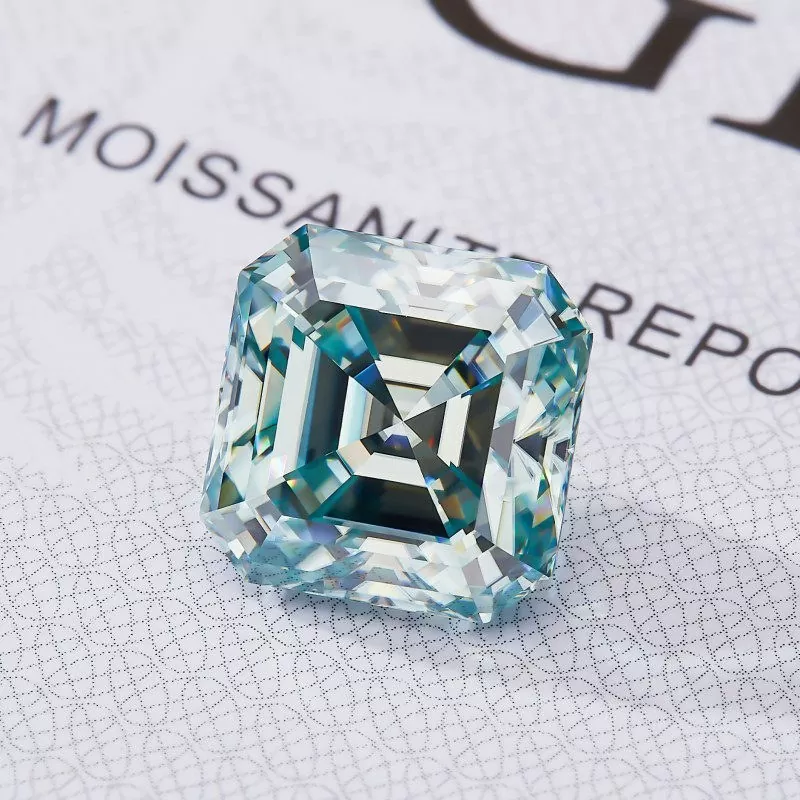
Take a 12mm round moissanite solitaire pendant in rhodium-plated 925 silver, 30 pieces, shipped to a US address. This is the single most common first order we run.
| Line item | Basis | Rough share of landed cost |
|---|---|---|
| Moissanite stone | Per carat, D-E-F color, VVS | 18 to 24 percent |
| 925 silver body | Per gram, roughly 2.6g per piece | 26 to 32 percent |
| Plating and finishing | Per piece, rhodium 0.1 micron | 8 to 12 percent |
| Setting and QC labor | Per piece, prong set | 14 to 20 percent |
| Freight, duty, fees | DDP, 30 pcs, US | 14 to 20 percent |
Silver is usually the biggest single line, not the stone. Buyers who assume the gemstone drives everything tend to over-negotiate on carat and under-negotiate on metal weight, which is where the real flexibility lives.
If you drop the silver body from 2.6g to 2.1g, you save real money per piece, and the pendant still looks fine on a chain. That is a design decision, not a quality cut, as long as the setting stays stable.
[4]Why Our Numbers Run About 20 Percent Better
On comparable specs, our landed cost and turnaround typically come in around 20 percent better than a typical trading company quoting the same pendant. That is not a marketing line, it is an arithmetic one.
A trading company buys from a factory, adds margin, and passes you a quote. You pay for that layer, and you also pay in time, because questions route through a sales desk that has never seen your pendant on a bench.
We cut, set, plate, and QC under one roof. No intermediary margin, no re-shipping between facilities, and a QC question gets answered by the person who actually handled the piece. That is where the 20 percent comes from: fewer handoffs, not cheaper stones.
Ask any supplier how many facilities your pendant touches before it reaches a shipping box. The answer tells you more about your landed cost than the unit price does.
[5]The MOQ Decision and What It Does to Your Cost per Piece
MOQ is a cost lever, not just a gate. Our stock designs start at 1 piece, so you can sample a style and hold it in your hand before committing. Custom pendants, meaning your own CAD, your stone spec, your plating call, start at 30 pieces.
Why 30? Below that, the setup, mold, and plating bath preparation get spread across too few units, and the per-piece cost climbs steeply. At 30 pieces the setup cost is diluted enough that the unit price becomes sensible.
If your first order is 10 pieces of a custom design, expect a per-piece number that looks alarming. The fix is usually to sample from stock at 1 piece, confirm the look and the chain compatibility, then place the 30-piece custom run once you know it sells.
[6]Lead Time, QC, and the Certificates You Should Expect
Production on a first pendants wholesale order runs 12 to 18 days after deposit and CAD approval. Add 5 to 8 days for DDP delivery to a US or EU address, and you are looking at roughly three to four weeks door to door.
QC happens in three stages on our floor. First, an incoming stone check: every parcel is graded for color and clarity before it goes to setting, and stones that miss the grade go back. Second, in-process inspection at the setting bench, where prong height and stone seat get checked piece by piece. Third, pre-ship AQL sampling on the finished, plated lot, which is where plating thickness, clasp and bail integrity, and surface finish get signed off.
Certificates follow the stone. Moissanite ships with a GRA card. Lab-grown diamond pendants above the size threshold ship with IGI documentation. If a supplier cannot tell you which body issues the certificate before you pay, that is a warning sign.
Payment terms are standard for us: T/T with 30 percent deposit to start production, balance before shipment. For samples, PayPal is fine so you are not wiring money for a single piece.
[7]Freight, Duty, and the Fees Buyers Forget
DDP means the freight quote includes delivery to your door with duty handled. That is the number to insist on for a first order, because a DDU quote leaves you exposed to a customs bill you did not model.
The fees buyers forget are smaller but they add up: payment processing on the deposit, a currency conversion spread if you pay in a currency other than USD, and inbound handling if your 3PL charges per carton. On a 30-piece order these are minor. On a 500-piece order they are worth negotiating.
Also budget for the sample you keep. A first order usually includes one piece per style that never sells, because it lives on your desk or goes to a photographer. Price that in from the start.
[8]How to Build Your First-Order Budget Sheet
Here is the sequence I recommend to buyers building their first landed-cost sheet.
- Get unit price with gram weight, stone carat weight, and plating micron stated in writing.
- Confirm MOQ per style and whether stock or custom.
- Ask for a DDP freight quote to your actual delivery zip or postcode, not a generic country rate.
- Add 3 percent for payment and currency friction.
- Add one sample piece per style as a non-selling line.
- Divide total landed cost by sellable pieces only, not total pieces.
That last line is the one most buyers skip. If you order 30 and keep 2, your true cost basis is 28 pieces, and your retail price should reflect that.
[9]Frequently Asked Questions
What is the minimum order for pendants wholesale?
Stock designs start at 1 piece so you can sample. Custom pendants with your own CAD and stone spec start at 30 pieces, which is the point where setup cost dilutes enough to make the unit price work.
How long does a first order take?
Production runs 12 to 18 days after deposit and CAD approval, plus 5 to 8 days for DDP delivery. Plan three to four weeks from payment to your door.
How is the price calculated?
Price is built per piece from stone carat weight and grade, silver gram weight, plating type and thickness, and setting labor. Freight and duty are quoted separately and should be requested as DDP.
If you want a landed-cost sheet built against your actual design, send the spec, the quantity, and your delivery address to service@holycome.com or message WhatsApp +86 133 7744 7107. We will quote stock samples at 1 piece and a custom run at 30, both with DDP freight included, so you can see the real number before you commit.