Journal / Colored Birthstone
Multiple Birthstone Family Ring Design
A buyer in Boise ordered 40 family rings with four birthstones in date order and had 11 back with a chipped peridot, because the softest stone sat where the finger takes the most impact.
A family ring is a set of constraints rather than a row of stones. The tones have to relate, the hardnesses have to be protected, and the order has to survive both.
[1]The tone order
The gradient rule
Four stones in a row read as a gradient, and the eye looks for the transition rather than for each stone. A ring that runs dark to light reads as a design; a ring that runs dark, light, dark, light reads as a mistake.
Ordering by tone rather than by date is the first decision, and it is the one most buyers resist. A buyer who insists on date order should accept that the gradient is a byproduct.
| Stone | Hardness | Tone | Placement |
|---|---|---|---|
| Ruby | 9 | Deep red | Centre |
| Sapphire | 9 | Deep blue | Centre |
| Emerald | 7.5 | Deep green | Side |
| Tourmaline | 7.5 | Variable | Side |
| Peridot | 6.5 | Light green | Inner |
| Opal | 5.5 | Light | Inner, bezel |
The placement column follows the hardness rather than the tone, and the two have to be reconciled. The hardest stone belongs at the centre and the softest at the inner position, where the finger protects it.
[2]Hardness and the finger's impact
Impact position
The centre stone sits where the finger meets a surface, and it takes the impact first. That is why the hardest stone in the set belongs at the centre, and why a soft stone at the centre chips.
A soft stone can be placed at the centre if it sits in a bezel, which spreads the impact across the metal rather than the facet edge.
[3]Size and the visual weight
Four stones of equal carat weight do not read equally, because a deep coloured stone carries more visual weight than a light one. A 4 mm sapphire reads larger than a 4 mm peridot.
The fix is a size adjustment of about half a millimetre on the light stones, which evens the row without changing the carat total much.
[4]What the metal does to a multi stone ring
A white metal cools all four stones and pushes the reds toward pink. A yellow metal warms them and pushes the blues toward green. On a four stone row the effect is cumulative rather than individual.
A buyer who wants a neutral reading should choose a metal that matches the dominant stone rather than the average of the four.
[5]Setting layout for four stones
Two layouts work: a row of four along the band, and a cluster with one centre and three around it. A row reads as a sequence and a cluster reads as a single unit, and the finger size decides which fits.
A row of four 4 mm stones needs about 18 mm of band, which is a size 6 finger. A row of four on a size 4 finger has to use 3 mm stones or a cluster.
[6]What we do
We place stones by hardness rather than date, size the light stones up by half a millimetre, and bezel the softest stone. Buyers who need date order get the gradient that results and a note on the placement compromise.
Minimum order is 50 pieces per design and sizes can be mixed. Sample lead time is around 20 days from approved CAD, bulk 25 to 30 days, and stock designs ship in 15 to 20 days under 500 pieces. Payment is a 30 percent deposit with the balance before shipment, by T/T, PayPal or Western Union.
[7]The ring that grows
A family ring is commissioned once and grows as a family grows, which means the design has to leave room. A row of four stones on a narrow band has no room for a fifth, and a cluster can add a stone at the shoulder.
A buyer planning a ring that will be updated should choose the cluster and leave one seat empty rather than fill four and start again. The empty seat is the cheapest future-proofing in a family commission.
A row can be extended only by re-making the band, which is a new ring rather than an addition.
[8]The gemstone that cannot take heat
Setting a soft stone uses no heat and a repair beside it may. An opal beside a joint that needs a solder becomes a stone that has to be removed and reset, which is a bench job the buyer should know about before the first repair.
A ring with an opal should be repaired by a bench that removes the stone first, and the removal costs a setting charge. That is a service cost rather than a purchase cost, and it belongs in the owner's expectation.
A gemstone like tourmaline behaves the same way and for the same reason.
[9]The photograph that sells a family ring
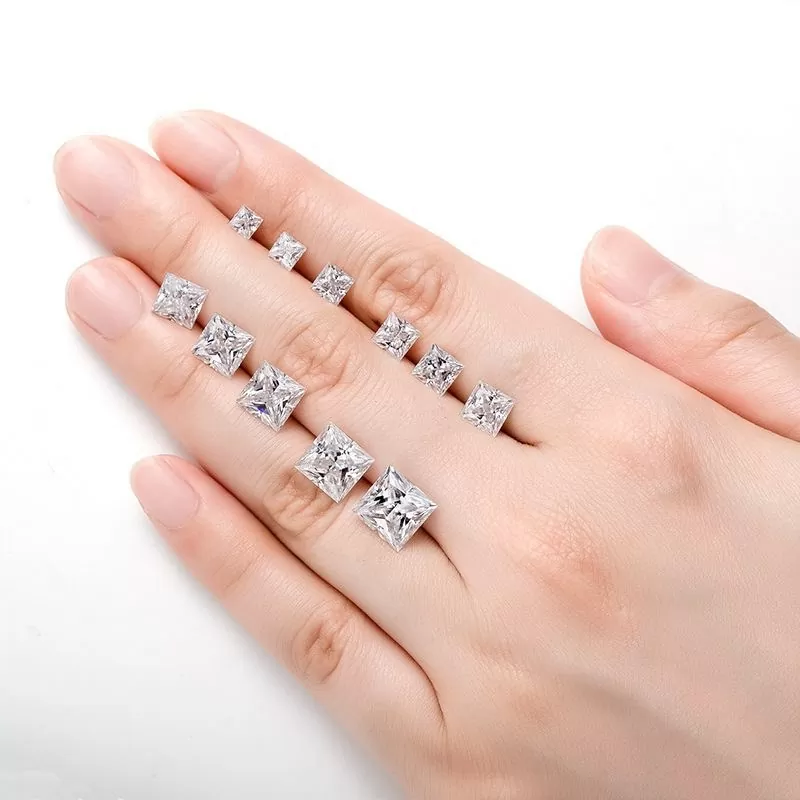
A family ring sells on the relationship between the stones, so the photograph has to show all of them in one frame at one scale. Four separate stone photographs do not communicate the gradient.
A set photograph on skin, at the delivered size, gives the customer the same reading the buyer approved. It is the single most effective image in the category.
[10]What the tone map should record
A tone map is four swatches and four hardness numbers on one page, and it lets a re-order reproduce the row without re-approving stones.
Without it the second order is a new design that resembles the first, and the family notices the difference before the buyer does.
[11]The carat total that reads right
Four stones at 0.25 ct each total 1 ct and read as a row of small stones rather than a 1 ct ring. A buyer who quotes the total and expects the look of a 1 ct centre stone will be disappointed.
The number that describes a multi stone ring is the centre stone's size plus the total, and both belong in a specification. A single total is a carat figure without a look.
[12]The repair that changes the row
Replacing one stone in a row changes the gradient, and the replacement has to be matched to the neighbours rather than to the original certificate. That matching is a look decision rather than a grade decision.
A buyer who keeps the tone map can match a replacement in a week; one who does not has to re-approve the whole row.
[13]What a family order repeats
A family ring account usually re-orders for a second child rather than for a new customer, so the second order is an addition rather than a new design. That makes the seat plan and the tone map the two documents that carry the business.
A supplier who can hold that record turns a one-off commission into a repeating account, and the record is the asset rather than the ring.
[14]The setting that holds four prongs
Four stones in a row means sixteen prongs on a narrow band, and sixteen prongs on 2 mm of metal leave very little wall between the seats. The risk is a seat that cracks at the drill rather than a stone that falls out.
A row of four should be built with shared prongs where possible, which halves the prong count and leaves the wall intact. A shared prong design is a CAD decision and it cannot be added to a casting.
A buyer who receives a row with sixteen separate prongs should expect a service interval of two years rather than five, because a prong check on sixteen points is a bench hour on its own.
[15]The bezel that protects a soft stone
A bezel around a peridot adds about 1.2 mm to the stone's footprint and it changes the row's rhythm, because a bezelled stone reads larger than a pronged one at the same size.
The compensation is to bezel the soft stone and reduce its carat weight by a step, which keeps the visual size in line with the neighbours. That adjustment is made at the stone selection rather than at the bench.
[16]Frequently Asked Questions
Should family ring stones follow birth order?
Only if the tones work. Placing by hardness protects the soft stones, and placing by tone gives a gradient the eye reads as a design.
Which stone goes in the centre?
The hardest one, because the centre takes the impact. A soft stone belongs in a bezel at the inner position.
Do equal carat stones look equal?
No. A deep stone reads larger than a light one at the same size, so the light stones need half a millimetre more.
How many stones fit a narrow band?
Four 4 mm stones need about 18 mm of band. Below a size 6 the row should use 3 mm stones or a cluster.
[17]Next step
Send the four birthstones and the finger size, and we will quote the placement, the sizes and the metal. See coloured stone work in the archive, read the journal on metal tone pairing, or open a brief on the contact page.