Journal / Moissanite Vs Diamond
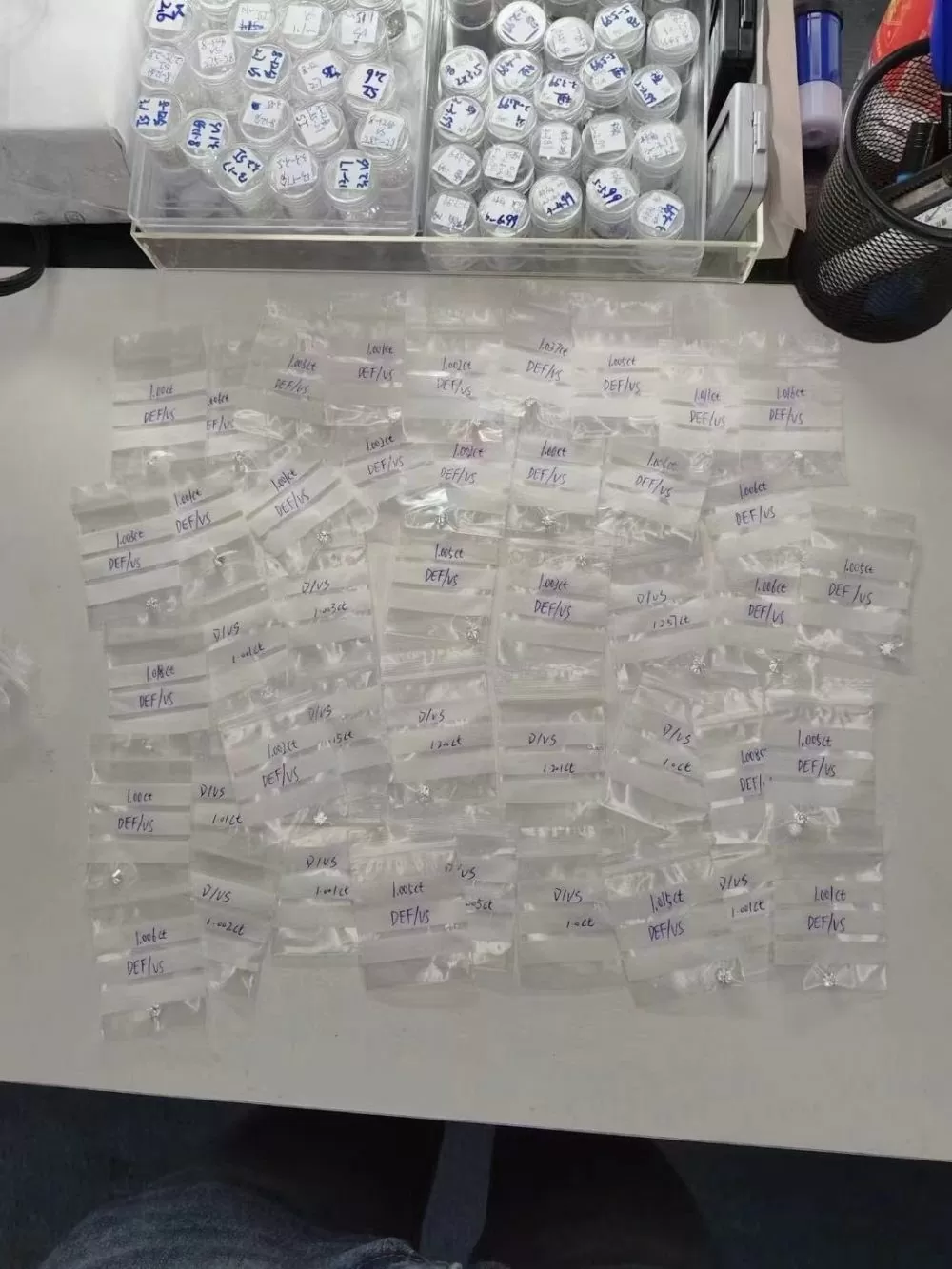
Moissanite vs. Diamond: How to Choose: A - HOLYCOME
This guide walks a wholesale or boutique buyer through moissanite and diamond the way our bench would talk it through on a sample day: what the order actually consists of, where the cost sits, and the checks that decide whether the lot lands clean on your shelf. No catalogue adjectives, just the numbers and the decisions we see buyers get wrong most often.
Reject on documented defects, not on taste: a tilted stone, a prong on the table, a plating gap at the inner shank, or a weight under spec are all measurable. Photograph the batch before it leaves the bench so a later complaint has a baseline. A supplier that pushes back on a documented defect is one you will spend the whole order negotiating with.
A first sample tells you more than a catalogue of five. On the sample, check the band or shank weight against the spec, look at the plating under a loupe at the high-friction points, confirm the stone sits level and the prongs sit above the girdle, and weigh the piece. A hollow or underweight body is the first thing a repeat order exposes.
Ask for the certificate and the alloy declaration in writing. A GRA or batch card declares grade and carat; it is not the same as an independent laboratory report, and the listing should say which one applies. For metal, the alloy sheet states the silver grade or the gold karat and confirms whether any nickel is added, which matters for customers with sensitive skin.
[1]Moissanite and diamond: the practical checks before you order
- Ask for the alloy declaration and confirm whether any nickel is added, especially for skin-sensitive customers.
- Confirm the size run, the millimeter measurements and the chain or band width on the listing.
- Photograph the batch on arrival so any later defect claim has a baseline to compare against.
- Confirm the stone grade and carat on the spec sheet, and note whether it ships on a batch card or a per-stone report.
- Weigh the piece against the listed weight; an underweight shank or body is usually the first sign of a thin build.
[2]Planning the first run
After the lot arrives, compare it against the sample you approved rather than against the photograph. Weight, finish, stone match and setting position are the things that drift between sample and bulk, and they are measurable. Keep the arrival photos with the order record so a later exchange or a reorder starts from the same baseline.
When you plan the order, work backwards from the sell-through you can actually predict. A first batch that covers six to eight weeks of sales is easier to correct than a deep run that ties up cash in a style the market has not answered yet. Once the reorder pattern shows, the second buy can go wider on the silhouettes that moved first.
[3]Reference range in our catalogue
| Reference | Specification | MOQ | Unit range |
|---|---|---|---|
| Bulk OEM Lab-Grown Diamond Round Loose Moissanite St | Lab-Grown Diamond · 925 Sterling Silver | 1 | on request |
| Bulk OEM Emerald Emerald Loose Moissanite Stones in | Emerald · 925 Sterling Silver | 1 | on request |
| 0.10 ct Moissanite Engagement Ring | Moissanite · 925 Sterling Silver | 1 | on request |
| Wholesale 1ct D Color Moissanite Round Necklaces in | Moissanite · 925 Sterling Silver | 1 | on request |
| Moissanite Men’s Ring MA095 | Moissanite · 925 Sterling Silver | 1 | on request |
Ranges reflect current factory pricing for this catalogue and move with metal and stone costs; treat them as planning figures and confirm against a written quotation.
In our experience, most disputes on a wholesale order come from a spec that was spoken rather than written. The weight, the plating micron and the stone grade should appear on the order or the spec sheet, not only in the chat.
The practical takeaway is straightforward: read the spec sheet before the price, hold the sample before the bulk, and judge the lot on weight, finish and stone match rather than on listing imagery. Do that consistently and the repeat orders mostly take care of themselves.
[4]Buyer questions
Which certificate or declaration matters?
The stone card or report number and the alloy declaration. Confirm whether the certificate is a batch card or a per-stone report, and keep the number matched to the parcel records.
What should I check on the first sample?
Weight against spec, plating under a loupe at friction points, stone levelness, prong position and overall weigh-in. Photograph the sample on arrival as the baseline for the bulk lot.
Can I order a sample before committing to bulk?
Yes. A sample from stock lets you judge weight, finish and communication before the bulk run; compare it against the spec sheet and keep arrival photos for the later comparison.
[5]Related reading
Read Moissanite vs. Diamond: What Buyers Actually Need to Know for the deeper walk-through.
Read Is D-Color Moissanite Worth It in 2026? for the deeper walk-through.