Journal / Lab Grown Diamond
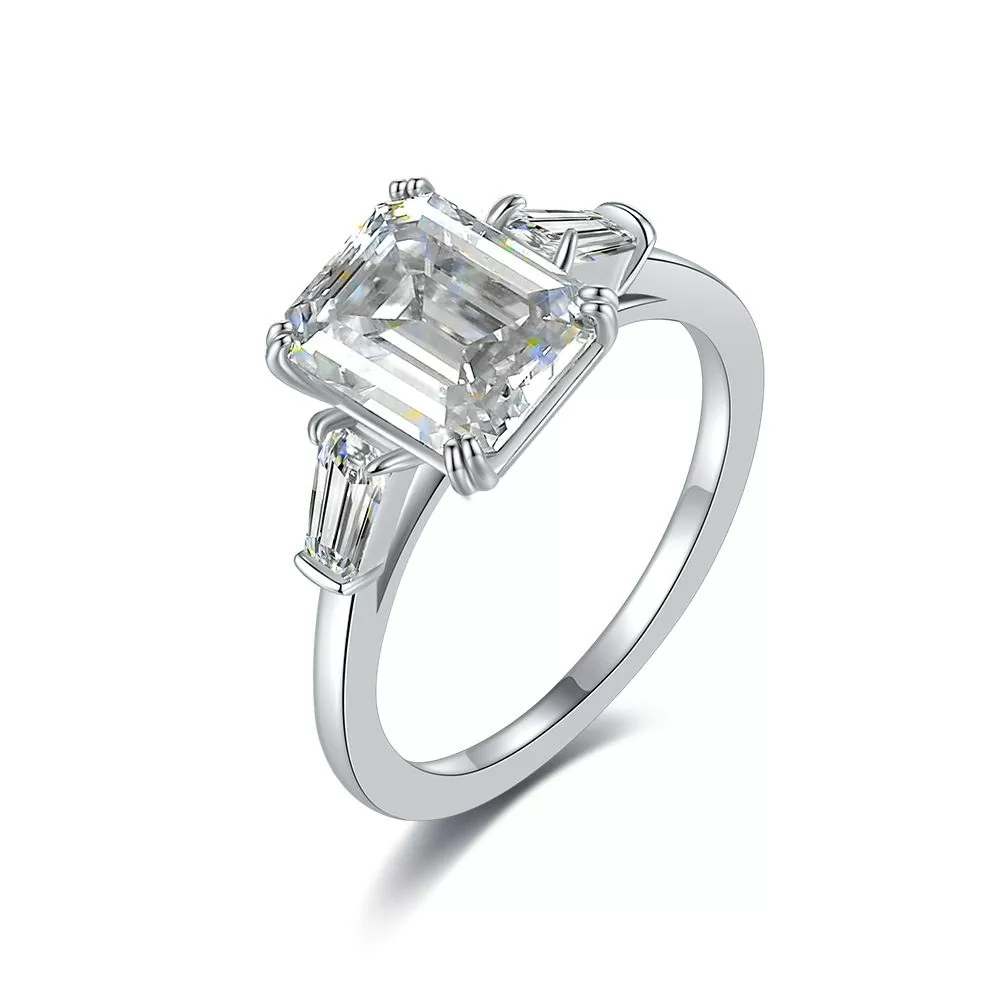
Lab Grown Diamond Price Volatility
A brand in Chicago signed a fixed price on 300 lab diamond rings for a spring launch, took delivery six months later, and found the market 18 percent below the price it had contracted.
Lab grown prices move down faster than any other jewellery input, because supply grows faster than demand. A bulk contract is therefore a price bet, and the bet should be written rather than assumed.
[1]Why the price falls
Production capacity has expanded faster than retail demand, and every new reactor adds supply at a cost that declines with scale. A 1 ct stone that sold for $1,900 in 2022 sold near $700 in 2026 at the same grade.
The decline is not a crash, it is a trend, and a trend is easier to contract against than a crash. The risk is not a sudden fall, it is a buyer who prices a six month project at today's cost and sells at a price that has to fall.
| Year | 1 ct G VS price | Change |
|---|---|---|
| 2022 | $1,900 | - |
| 2023 | $1,400 | -26% |
| 2024 | $1,050 | -25% |
| 2025 | $820 | -22% |
| 2026 | $700 | -15% |
The pattern is a compound decline of 15 to 26 percent a year. A contract written against a single number assumes that decline stops, which it has not for four years.
[2]The three contract structures
Fixed price, indexed price and split price. A fixed price protects the buyer from a rise and exposes them to a fall. An indexed price ties the stone price to a published list and removes the bet.
A split price fixes the metal and the labour and indexes the stone, which is the structure most bulk buyers should want, because the volatile input is isolated and the stable inputs are fixed.
What to index against
Index against a published wholesale list rather than a supplier's own sheet, because a supplier's sheet is a commercial document and a list is a market reference. The contract should name the list and the date used for each shipment.
A monthly average reduces the effect of a single week's move, and it is the standard structure in other commodity trades.
[3]Inventory that loses value while it sits
A held stone loses value twice: once against the market and once against the cash tied up in it. A 300 stone inventory at a 20 percent annual decline loses more in a year than the margin on the retail sale.
The implication is turnover rather than stock. A buyer who holds six months of stones in a falling market is holding a depreciating asset, and the depreciation is invisible until the next buy.
The reorder effect
A reorder six months later costs less than the first order, which is good for the buyer and awkward for the retail price. A retailer who keeps the same shelf price while cost falls is leaving margin on the table; one who cuts the price is protecting volume.
[4]What a supplier can offer
Three structures from the supplier side: a price hold for 60 days, a price match against a named list at shipment, and a buy-back at the shipment price within 90 days.
A 60 day hold covers a sample and approval cycle. A match at shipment removes the timing risk. A buy-back is the strongest offer and only a supplier with deep capacity can make it.
[5]What we do
We quote lab diamond lots with a named list reference, hold the price for 60 days, and match the list at shipment on orders above 200 stones. Buyers who need a fixed number for a retail launch can have it, with the trade-off stated in writing.
Minimum order is 50 pieces per design and sizes can be mixed. Sample lead time is around 20 days from approved CAD, bulk 25 to 30 days, and stock designs ship in 15 to 20 days under 500 pieces. Payment is a 30 percent deposit with the balance before shipment, by T/T, PayPal or Western Union.
[6]The margin calculation under a falling price
A retailer who buys at $700 and sells at $1,400 has a 50 percent gross margin on the day of purchase, and a 44 percent margin if the stone's replacement cost falls to $620 during the two months it sits on the shelf. The second number is the one that belongs in the planning sheet, because it is the number the buyer will actually realise.
The margin calculation also has to include the cash cost of holding inventory. A stone bought at $700 and held for six months ties up capital that could have bought a cheaper stone later, and the opportunity cost is usually larger than the storage cost and invisible in a margin report.
The practical rule is to price a lab diamond piece from the replacement cost at the expected sale date rather than the purchase date. That rule makes the margin smaller on paper and keeps it stable in practice.
[7]What a price list reference should specify
A contract should name the list, the grade band, the size band, the averaging period and the date of application. Those five fields remove almost every dispute about what the price was on a given shipment.
A contract that says market price is a contract with no reference, and a dispute under it is settled by the stronger party rather than by the document. The cost of specifying the five fields is a paragraph; the cost of leaving them out is a renegotiation.
A buyer should also specify what happens if the named list stops publishing, because a list that disappears leaves the contract without an index and the supplier with discretion.
[8]The retail price story
A lab diamond ring at retail has to tell a price story that survives a falling stone market, because a customer who bought last year can see this year's price. The story that works is the design and the service rather than the stone's rarity.
A retailer who sells on the stone's price will be repricing every quarter. One who sells on the setting, the finish and the guarantee holds a price while the input falls, and the margin improves rather than erodes.
That is a merchandising decision rather than a sourcing one, and it is worth making before the first lab diamond order rather than after the third.
[9]When a fixed price is the right choice
A fixed price is right when the retail price is already committed, such as a pre-sold custom order or a contract with a wholesale account that cannot be repriced. In those cases the price risk has to sit somewhere, and the buyer who has already quoted is the one holding it.
A fixed price is also right for a small order where the total exposure is below the cost of administering an index. On fifty stones the difference between fixed and indexed is a few hundred dollars, which is less than the paperwork.
In every other case, an indexed or split price is the better structure, because it puts the volatile input where it can be measured rather than where it can surprise.
[10]How a buyer should model the decline
A simple model uses three inputs: the current price, an assumed annual decline and the number of months between purchase and sale. A 700 dollar stone at a 20 percent annual decline is worth 630 dollars after six months, and that difference is the budget the design has to absorb.
The model does not need to be precise to be useful, because its value is in forcing the buyer to state an assumption rather than inherit one. A stated assumption can be revised at the next order; an inherited one cannot.
A buyer who runs the model once per season will see the decline in their own numbers rather than in a market report, and that is the version they will act on.
[11]The stone that does not lose value
Very large stones lose value more slowly in percentage terms, because supply at 5 ct and above is thin and the decline applies to the mass market rather than the top. That is the only corner of the lab diamond market where a hold makes sense.
Fancy colours also behave differently, because the supply of a specific hue is limited by the growth process rather than by capacity. A pink lab diamond does not follow the white stone curve.
A buyer who wants a stone that holds value should be in one of those two corners or in a natural stone. Everything in the white mass market is a depreciating input, and treating it as anything else is a planning error.
[12]Frequently Asked Questions
Will lab diamond prices keep falling?
Capacity is still growing faster than demand, so the trend is likely to continue at a slower rate. A contract should assume a decline rather than a flat market.
Should I fix the price on a bulk order?
Only with a reason, such as a retail price already committed. Otherwise an indexed or split price removes a bet the buyer does not need to take.
How much stock should I hold?
Enough for one production cycle, not a season. Holding stones in a falling market costs more in depreciation than it saves in lead time.
Is a buy-back realistic?
At the shipment price within 90 days, yes, from a supplier with capacity. It should be in the contract with the price definition, not agreed verbally.
[13]Next step
Tell us the stone size range, the grade and the shipment month, and we will quote a split price with the stone indexed. See lab grown work in the archive, read the journal on growth methods, or open a brief on the contact page.