Journal / Lab Grown Diamond
Landed Cost for Lab Grown Diamond: The Number - HOLYCOME
We spend most of our time on diamond, so this guide is written from what comes back to the bench: the pieces that reorder, the complaints that should have been prevented, and the price lines that survive a marketplace margin. Treat the figures below as planning anchors rather than a fixed quotation; metal and stone costs move, and every lot is priced on its own specification.
Unit price improves quickly with quantity because the setup cost — mould pass, stone matching, plating bath — is spread across more pieces. The setup is why a single sample costs more per piece than a bulk run, and why ordering a slightly larger quantity at a slightly lower MOQ tier often beats pushing the MOQ down to one.
There are cost lines you should not cut to win a cheaper quote. A thinner band, lighter plating or a lower stone grade saves a few cents per piece and shows up in the return rate. If a quote comes in well under the rest, ask for the weight, the plating micron and the stone grade on paper before you compare the headline number.
The wholesale price breaks into four broad lines: the metal, the stone, the bench labour, and the overhead that covers plating, certificate, packaging and export handling. Of those, labour and plating are the two a supplier can move honestly, while the stone line follows grade and carat. When a quote looks unusually low, the first place to look is the plating thickness and the shank weight, not the branding.
[1]Diamond: the practical checks before you order
- Ask for the alloy declaration and confirm whether any nickel is added, especially for skin-sensitive customers.
- Confirm the size run, the millimeter measurements and the chain or band width on the listing.
- Photograph the batch on arrival so any later defect claim has a baseline to compare against.
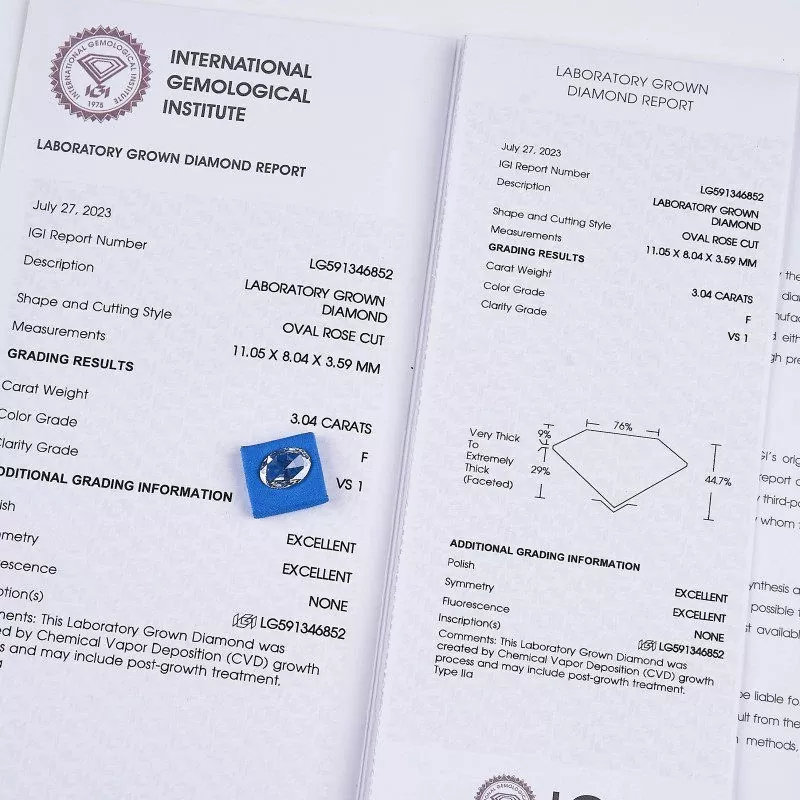
- Confirm the stone grade and carat on the spec sheet, and note whether it ships on a batch card or a per-stone report.
- Weigh the piece against the listed weight; an underweight shank or body is usually the first sign of a thin build.
[2]Planning the first run
After the lot arrives, compare it against the sample you approved rather than against the photograph. Weight, finish, stone match and setting position are the things that drift between sample and bulk, and they are measurable. Keep the arrival photos with the order record so a later exchange or a reorder starts from the same baseline.
When you plan the order, work backwards from the sell-through you can actually predict. A first batch that covers six to eight weeks of sales is easier to correct than a deep run that ties up cash in a style the market has not answered yet. Once the reorder pattern shows, the second buy can go wider on the silhouettes that moved first.
[3]Reference range in our catalogue
| Reference | Specification | MOQ | Unit range |
|---|---|---|---|
| Wholesale Lab-Grown Diamond Round Loose Moissanite S | Lab-Grown Diamond · 925 Sterling Silver | 1 | on request |
| Custom Private Label Lab-Grown Diamond Round Loose M | Lab-Grown Diamond · 925 Sterling Silver | 1 | on request |
| Custom Private Label Lab-Grown Diamond Round Bracele | Lab-Grown Diamond · 925 Sterling Silver | 1 | on request |
| Factory-Direct Lab-Grown Diamond Round Loose Moissan | Lab-Grown Diamond · 925 Sterling Silver | 1 | on request |
| Bulk OEM Lab-Grown Diamond Round Bracelets in 925 St | Lab-Grown Diamond · 925 Sterling Silver | 1 | on request |
Ranges reflect current factory pricing for this catalogue and move with metal and stone costs; treat them as planning figures and confirm against a written quotation.
[4]Where the wholesale price sits
| Component | Share | At $15.00 per piece |
|---|---|---|
| Metal and casting | 19% | $2.85 |
| Stone and setting | 37% | $5.55 |
| Labour and finishing | 19% | $2.85 |
| Plating and surface | 8% | $1.20 |
| Certificate and packaging | 8% | $1.20 |
| Margin and export handling | 13% | $1.95 |
In our experience, most disputes on a wholesale order come from a spec that was spoken rather than written. The weight, the plating micron and the stone grade should appear on the order or the spec sheet, not only in the chat.
If you are putting together a first run in this category, start with the stock silhouettes, keep the size run standard, and let the sell-through decide where the next batch expands. That approach protects margin better than chasing the widest catalogue on day one.
[5]Buyer questions
What makes up the wholesale price?
Metal, stone, bench labour and the overhead for plating, certificate, packaging and export handling. Labour and plating are the lines a supplier can adjust honestly; the stone line follows grade and carat.
Where can cost be cut honestly without hurting quality?
Packaging tier, order quantity and size run are the cleanest places to adjust. Metal weight, plating thickness and stone grade are the lines not to cut, because those savings return as after-sales problems.
Can I order a sample before committing to bulk?
Yes. A sample from stock lets you judge weight, finish and communication before the bulk run; compare it against the spec sheet and keep arrival photos for the later comparison.
[6]Related reading
Read Moissanite vs. Diamond: What Buyers Actually Need to Know for the deeper walk-through.
Read Custom Lab Grown Diamond Rings: IGI Reports and Cut for the deeper walk-through.