Journal / Custom Engagement Rings
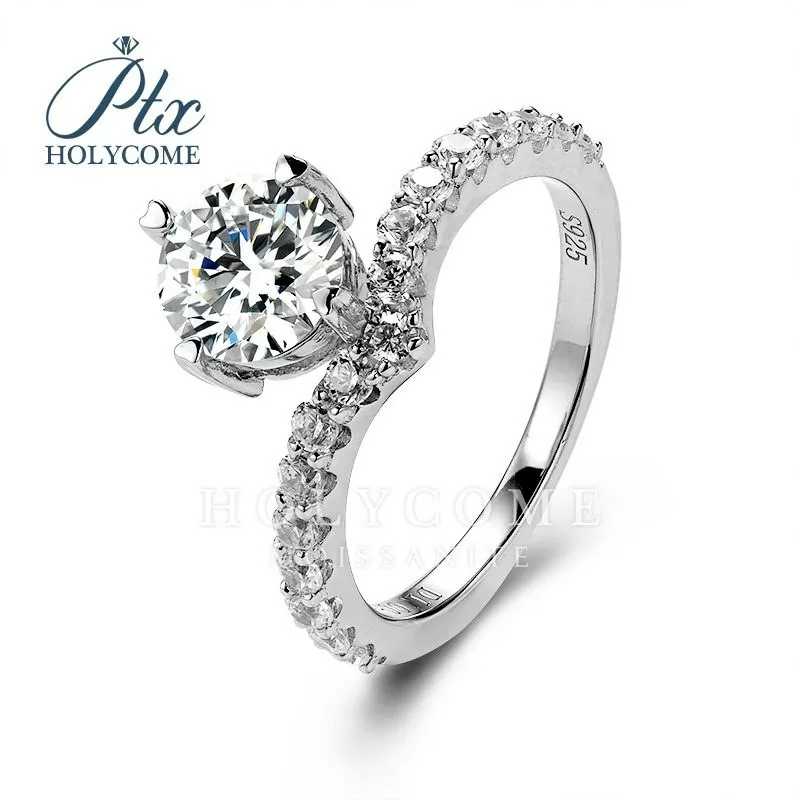
Halo Proportions on Custom Engagement Rings
A jewellery buyer in Los Angeles ordered a halo ring at 1.1 ct and rejected the sample for a reason the factory could not see: the halo looked like a separate ring placed around the stone. The centre stone was correct, the melee was correct, and the design still failed.
The problem was proportion. The halo sat 0.9 mm away from the stone with a flat outer edge, so the gap read as a channel rather than a rim of light. Building the halo closer, tapering the shoulders and stepping the melee down by one size turned the same stone into a ring that reads as one piece.
[1]What "halo proportion" means in practice
Four numbers decide how a halo ring reads. The distance from the stone's girdle to the inner edge of the halo, the diameter of the melee, the height of the halo above the stone's table, and the taper of the shoulders into the band.
Get all four inside their working ranges and the ring looks designed. Miss any one and the ring looks assembled, which is the failure customers describe as "not quite right" without being able to name it.
Halo to centre gap
The inner edge of the halo should sit 0.10 to 0.20 mm from the girdle of the centre stone. Closer than 0.10 mm, the melee presses the stone and the setting becomes difficult to polish. Wider than 0.25 mm, the gap shows as a dark line and the halo separates visually.
On a 1 ct round, that means a halo inner diameter of about 6.6 to 6.8 mm, against a stone diameter of roughly 6.5 mm. The number is small, and it is the one most often rounded to 7.0 mm in a first CAD.
Melee size
Melee of 1.0 to 1.3 mm reads as a continuous rim. At 1.5 mm and above, individual stones become visible and the halo starts to look like a second row of accents rather than a rim. At 0.8 mm and below, the line becomes a texture and loses definition in photographs.
Halo height
The halo should sit level with the table of the centre stone or 0.2 to 0.3 mm below it. A halo raised above the table shades the stone and cuts the brightness that a halo is meant to add. A halo set well below the table disappears in a side view and makes the ring look like a solitaire with a skirt.
Shoulder taper
The transition from the halo to the shoulders should narrow over 3 to 5 mm rather than stop abruptly. A hard stop creates a visible shelf where the ring catches on clothing, and a shelf is also where plating wears first.
[2]Two halo styles and their numbers
The two halos we build most often are the classic round halo and the cushion halo on a round stone. They use different melee counts and different gap tolerances, and mixing the numbers is a common source of a rejected sample.
| Attribute | Classic round halo | Cushion halo on round | Effect of going wrong |
|---|---|---|---|
| Melee size | 1.0-1.2 mm | 1.2-1.4 mm, tapered | Rim reads as texture or as accents |
| Stone count | 16-20 for 1 ct | 12-16 with corner stones | Uneven spacing at the corners |
| Gap to girdle | 0.10-0.20 mm | 0.15-0.25 mm | Dark line or setting difficulty |
| Halo height | Level with table | 0.2-0.3 mm below table | Shading or disappearance |
| Shoulder taper | 3-4 mm | 4-5 mm | Shelf that catches fabric |
[3]Where halos fail inspection
Three failures account for most halo rejections on our bench, and all three are visible before setting if the sample is checked against the drawing.
- Melee spacing that opens at the four cardinal points, leaving visible gaps
- A halo that is not concentric with the centre stone, usually 0.2 mm off
- Prong tips that sit proud of the halo instead of blending into it
Concentricity is the one that photographs badly. A halo offset by a fifth of a millimetre looks fine on a bench and obvious in a straight-on product shot, which is where the customer sees it.
[4]Cost of getting it right the first time
A halo adds melee, setting labour and inspection time. On a 1 ct ring, 18 melee at 1.1 mm adds roughly 35 to 45 minutes of setting against a plain solitaire, plus the melee cost at parcel prices. The proportion work itself is CAD time, and it does not repeat once the file is fixed.
Where buyers lose money is the sample loop: a halo sample rejected for proportion costs a full setting pass, and the melee usually cannot be reused because the seats were cut for a specific layout.
[5]What our halo programme includes
Every halo file carries the four numbers above as dimensions on the drawing, not as notes on a render. On the cast sample we check concentricity, spacing at the cardinal points and the gap to the girdle before any melee is set, which is the stage where a correction is still cheap.
Minimum order is 50 pieces per design, and sizes can be mixed within the design. Sample lead time is around 20 days from approved CAD, and bulk 25 to 30 days after sample approval; stock designs ship in 15 to 20 days under 500 pieces. Payment is a 30 percent deposit with the balance before shipment, by T/T, PayPal or Western Union. Pricing steps down at 200 and 500 pieces.
For buyers running several halo designs, we keep a shared melee specification so the rims match across the range. A collection where one halo uses 1.1 mm melee and another uses 1.4 mm reads as two suppliers rather than one programme.
[6]Melee quality and the halo edge
The halo edge is the first place a customer's eye lands, and it is the place where a cheap parcel shows. Two attributes decide how the rim looks in photographs and in the hand.
Colour consistency across the parcel
A halo of eighteen stones can carry four or five colour grades if the parcel is not sorted. The eye catches the two or three outliers before it registers the centre stone. Sorting by colour into single-grade parcels is the step that keeps a rim even.
Cut and brightness
Melee with shallow pavilions looks flat in a halo, because the rim is seen at a glancing angle where a shallow stone returns little light. Full-cut melee with a steeper pavilion reads brighter at that angle, which is why halo melee should never be bought as a generic parcel.
[7]Photographing a halo ring
A halo is harder to photograph than a solitaire because the rim sits in a different focal plane from the centre stone. Two failures dominate: the halo goes dark while the centre blows out, or the rim is out of focus at the top of the frame.
- Shoot straight on for the product page, where concentricity is visible
- Shoot a 30-degree side view to show halo height against the table
- Use two diffused lights at equal power to keep the rim and centre in range
- Avoid a single point light, which turns the rim into a ring of highlights
The straight-on shot is also the one that reveals a halo that is not concentric, which is why we photograph every halo sample before it is packed. A sample that photographs badly is a sample the buyer will reject on arrival, whatever the bench notes say.
[8]Frequently Asked Questions
Does a halo make the centre stone look bigger?
It adds apparent diameter at the edge, typically 1.5 to 2 mm across on a 1 ct stone. It does not change the stone's own measurement, and a listing should describe the halo separately rather than implying a larger carat.
Can a halo be added to an existing ring?
Usually not without rebuilding the setting. The halo needs seats cut into a new gallery, and retrofitting means removing the centre stone, replacing the head and resetting it. It is a rebuild, not an add-on.
Which melee grade should I use in a halo?
Match the colour and clarity grade to the centre stone within one grade. A halo of visibly whiter melee around a warmer centre stone makes the centre look warmer than it is, which is the complaint that follows a mismatched parcel.
Is a cushion halo more expensive than a round one?
Slightly. The corner stones need individual seats and the spacing is less forgiving, so setting time runs 10 to 15 percent higher. The melee count is usually lower, which offsets part of the difference.
[9]Next step
Send the centre stone's measurement and the look you want, and we will return a halo CAD with the four proportions stated as dimensions. Browse the archive for halo references, read the journal on setting styles, or go straight to the custom page to start a file.