Journal / Custom Engagement Rings
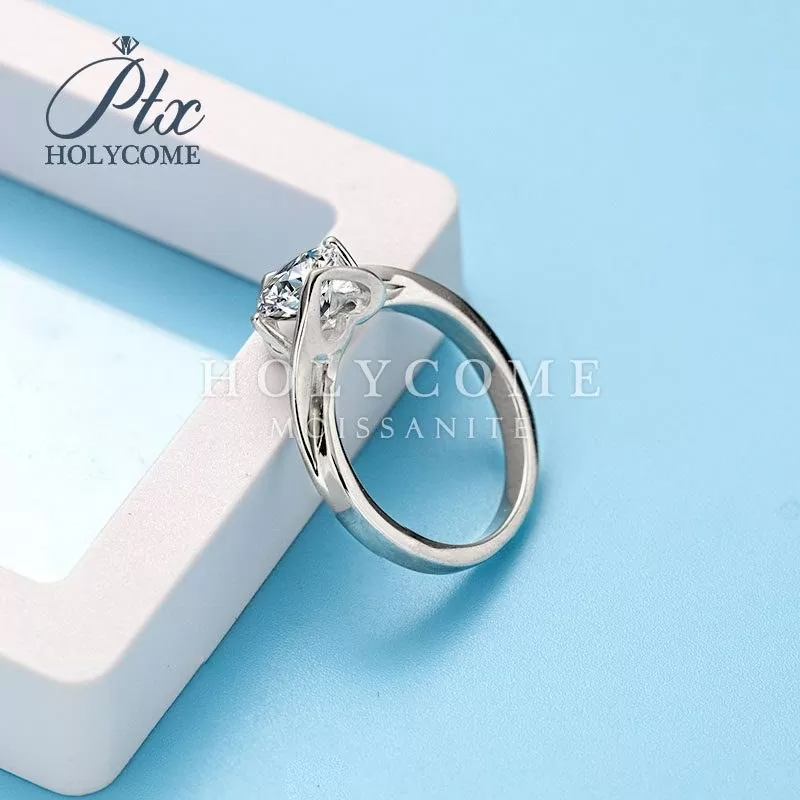
Wax Trial Fit Before Casting a Ring
A retailer in Manchester ordered a wide comfort-fit band with a 1.6 ct oval, approved the render, and received a ring her customer could not get over the knuckle. The size was correct on paper. The problem was the combination of a 7.5 mm band and a high gallery on a hand with a wide knuckle and a narrow finger base.
The fix was not a resize. A comfort-fit band at that width cannot be taken up two sizes without distorting the interior profile, so the ring was recast. One week of a wax trial would have prevented a five-week rebuild.
[1]What a wax trial actually tests
A wax or resin trial is a physical model of the approved CAD in a soft material, usually printed or carved at the same dimensions as the finished ring. It is not a prototype of the finish. It is a prototype of the geometry.
Three things show up in the hand that never show up on a screen: how the ring passes the knuckle, where the gallery contacts the finger, and whether the width feels right on the hand it is meant for.
Passing the knuckle
Most people have a knuckle that is wider than the base of the finger. A ring sized to the base can be tight at the joint, and a ring sized to the knuckle can spin. A wax model lets the wearer try both, and the result is often a compromise: size to the knuckle and add a two-row interior comfort profile rather than a single curve.
Gallery contact
A high gallery presses the webbing between the fingers when the hand closes. The wearer notices this within minutes, and no render shows it. On a wax model, the contact point is visible as a light mark, and lowering the gallery by 0.5 mm usually removes it.
Width on the hand
Width reads differently at 4 mm and 7 mm than it does in a 3D viewport. A 7 mm band on a size 5 finger covers most of the visible finger, and customers who chose it from a render often choose 5.5 mm once they wear the model.
[2]When a wax trial is worth the week
Not every ring needs one. A 2 mm solitaire on a standard finger is predictable, and a wax trial only adds a step. The designs that benefit share a trait: the geometry interacts with the hand rather than sitting above it.
- Bands wider than 5 mm, where the interior profile decides comfort
- Halo and three-stone rings with a gallery above 7 mm
- Rings built for a wide knuckle or a finger that swells
- Shaped bands designed to sit against an existing ring
- Any design above 200 pieces, where one geometry error repeats
[3]What the trial does not fix
A wax model confirms geometry, not finish. Surface texture, plating colour, stone brightness and prong appearance all change in metal, and a buyer who judges those from a wax model is judging the wrong material.
It also does not replace a cast sample. For volume orders, a cast sample from the approved file is the reference for the incoming inspection, and the wax trial sits earlier in the sequence as a fit check rather than a production reference. Treating one as the other is how a buyer ends up approving a fit and inspecting a finish on the same day.
[4]Cost and timing
A wax or resin trial adds roughly five to seven days to the schedule and a small modelling charge. It is worth comparing that against the alternative: a recast adds fifteen to twenty days, consumes the first casting and restarts the setting queue.
| Stage | Typical time | What it catches | Cost exposure |
|---|---|---|---|
| CAD and render | 3-5 days per round | Proportion and height on screen | Hours of modelling |
| Wax or resin trial | 5-7 days | Fit, knuckle, gallery contact | Model plus shipping |
| Casting and setting | 10-15 days | Metal behaviour, stone seats | Metal and labour |
| Recast after approval | 15-20 days | Nothing — it is the correction | Full second build |
[5]How to run a trial properly
A trial is only useful if the right person wears it and the right questions are asked. Four steps keep it short.
- Print the model at the approved dimensions, not at a prototype scale
- Have the wearer put it on cold, then warm, and note where it sticks
- Ask about the knuckle, the webbing and the finger gap, in that order
- Record the change as a dimension on the CAD, not as an adjective
The last step is the one that saves the second round. "Feels tight" becomes "increase interior diameter by 0.4 mm at the base and keep the knuckle clearance". A note in dimensions can be executed; a note in feelings cannot.
[6]Where trials get skipped, and what it costs
Buyers skip the trial for three reasons: the schedule is tight, the design looks standard, and the customer has already seen a render and approved it. Each reason is understandable and each has a predictable cost.
Tight schedules
A trial adds five to seven days. A recast adds fifteen to twenty and usually lands after the customer has been given a delivery date. The trial does not slow the order down in practice, because the time it consumes comes out of the buffer that a recast would consume entirely.
Designs that look standard
The rings that surprise buyers are the ones that look familiar: a 6 mm band, a low-set oval, a band with a shaped curve. Standard at 2 mm is not standard at 6 mm, because the interior proportion changes faster than the outside does.
Approvals given from a render
A render approval transfers the geometry decision to the person who approved the image, and that person is usually not the wearer. When the wearer is a different person, a trial is the only stage where their hand enters the process before the metal does.
[7]What a trial should cost
A printed resin model at ring scale, shipped with the first CAD pack, is a small line item. On our quotes it sits at a fixed charge per design rather than per size, because the geometry question is the same across a size run.
The comparison that matters is not the trial against zero, it is the trial against a rebuild. A rebuild carries a second casting, a second setting pass and a delivery date that has to be renegotiated with a customer who has already been told a date. Shipping the model by courier adds two to four days, and it is the only part of the week that a buyer cannot compress by working faster.
[8]What we do on volume programmes
For a new design going into a run, we send a wax trial when the geometry warrants it and a cast sample before the full order. The buyer approves the cast sample, and that sample stays with the order paperwork as the inspection reference.
Minimum order is 50 pieces per design with mixed sizes allowed. Sample lead time is around 20 days from approved CAD, and bulk runs 25 to 30 days after sample approval; stock designs ship in 15 to 20 days under 500 pieces. Payment is a 30 percent deposit with the balance before shipment, by T/T, PayPal or Western Union, and pricing steps down at 200 and 500 pieces.
Across our own production, rings that went through a wax trial came back for resizing at roughly 40 percent the rate of rings approved from render alone. The trial costs a week; the resize costs a customer.
[9]Frequently Asked Questions
Is a wax trial the same as a sample ring?
No. A wax trial is a soft model used to check fit and geometry. A sample ring is cast in the final metal, set with the final stone and finished, and it is the piece a buyer signs off before a production run. The two answer different questions and they arrive in that order.
Can a wax trial be done without a stone?
Yes. The model carries a stone representation at the correct diameter and height, which is enough for fit and gallery checks. Stone colour and brightness are judged later, in metal.
Does a trial change the MOQ?
No. The minimum stays at 50 pieces per design, and the trial is charged as a one-off rather than per unit. On orders above 200 pieces we usually absorb the trial into the tooling cost.
What if the customer changes the design after the trial?
A design change after the trial returns the file to CAD, and the schedule restarts from that round. That is the point of doing the fit check before casting rather than after.
[10]Next step
Tell us the finger size, the band width and the stone you have in mind, and we will advise whether the design needs a trial before it is cast. See the custom programme, compare widths in the archive, or read the journal on comfort-fit profiles before you choose.