Journal / Custom Engagement Rings
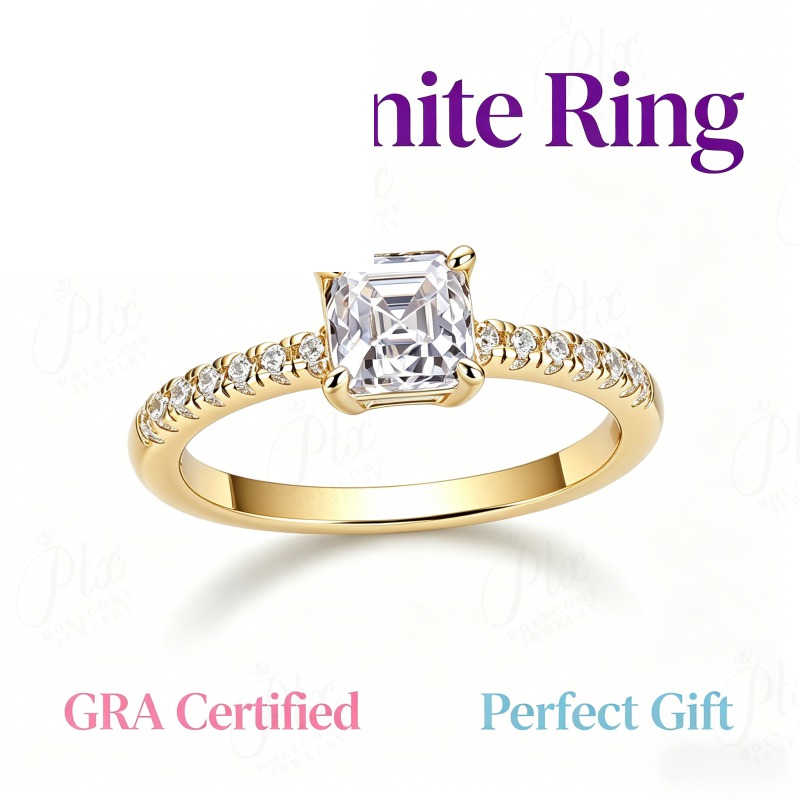
The Custom Engagement Rings Season Calendar - HOLYCOME
We spend most of our time on rings and ring, so this guide is written from what comes back to the bench: the pieces that reorder, the complaints that should have been prevented, and the price lines that survive a marketplace margin. Treat the figures below as planning anchors rather than a fixed quotation; metal and stone costs move, and every lot is priced on its own specification.
What stays out of fashion is the question worth asking alongside what is current. Heavy ornamentation and settings that fight the stone tend to date fastest; clean settings, even proportions and a wearable size curve stay sellable long after a season’s finish has moved on. Balance the trend depth against core stock so a slow style does not tie up inventory.
The styles that move in a season are usually evolutions of a lasting silhouette rather than a new shape. Solitaires, studs, hoops and tennis lines hold their volume across years; the season changes the finish, the stone size and the proportions. A buyer testing a trend should start with a narrow depth in the style rather than a wide size run, then deepen the range on what sells through.
The safest first buy in a new direction is a style that already has a match in the catalogue. A statement finish on a standard silhouette lets you test the look without committing to an unfamiliar mould or setting complexity. Trend pieces should be planned against the calendar — holiday, bridal, gifting — because the window for a fast-moving style is shorter than a core line.
[1]Rings and ring: the practical checks before you order
- Ask for the alloy declaration and confirm whether any nickel is added, especially for skin-sensitive customers.
- Confirm the size run, the millimeter measurements and the chain or band width on the listing.
- Photograph the batch on arrival so any later defect claim has a baseline to compare against.
- Confirm the stone grade and carat on the spec sheet, and note whether it ships on a batch card or a per-stone report.
- Weigh the piece against the listed weight; an underweight shank or body is usually the first sign of a thin build.
[2]Planning the first run
When you plan the order, work backwards from the sell-through you can actually predict. A first batch that covers six to eight weeks of sales is easier to correct than a deep run that ties up cash in a style the market has not answered yet. Once the reorder pattern shows, the second buy can go wider on the silhouettes that moved first.
Mixing the range on the first order is a judgment call. A small number of proven designs at a workable MOQ gives the bench less to set up and the buyer fewer decisions to defend if something underperforms. Reserve the experimental finishes and newer shapes for a later batch, once the core of the catalogue has proved itself with your customers.
[3]Reference range in our catalogue
| Reference | Specification | MOQ | Unit range |
|---|---|---|---|
| Bulk OEM Lab-Grown Diamond Heart Earrings in 925 Ste | Lab-Grown Diamond · 925 Sterling Silver | 1 | on request |
| Custom Private Label 1ct D Color Moissanite Round Ri | Moissanite · 925 Sterling Silver | 1 | on request |
| Custom Moissanite Engagement Ring — NS-0595 | Moissanite · 925 Sterling Silver | 1 | on request |
| Wholesale Manufacturer 1ct D Color Moissanite Round | Moissanite · 925 Sterling Silver | 1 | on request |
| Custom Lab-Grown Diamond Engagement Ring | Lab-Grown · 925 Sterling Silver | 1 | on request |
Ranges reflect current factory pricing for this catalogue and move with metal and stone costs; treat them as planning figures and confirm against a written quotation.
A buyer who asks for the sample, the spec sheet and the certificate first usually places the cleaner reorder. The supplier that resists those three before the first deposit is telling you something useful already.
The practical takeaway is straightforward: read the spec sheet before the price, hold the sample before the bulk, and judge the lot on weight, finish and stone match rather than on listing imagery. Do that consistently and the repeat orders mostly take care of themselves.
[4]Buyer questions
Which styles should I stock first in a new season?
Start narrow on a proven silhouette with a season-appropriate finish, then deepen the range on sell-through. A statement finish on a standard shape tests the look without an unfamiliar mould.
What stays sellable after the trend passes?
Clean settings, even proportions and a wearable size curve hold up best; heavily ornamented pieces date fastest. Balance trend depth against core stock so a slow style does not tie up inventory.
Can I order a sample before committing to bulk?
Yes. A sample from stock lets you judge weight, finish and communication before the bulk run; compare it against the spec sheet and keep arrival photos for the later comparison.
[5]Related reading
Read How to Design a Custom Engagement Ring in 2026 (Atelier for the deeper walk-through.
Read Custom Lab Grown Diamond Rings: IGI Reports and Cut for the deeper walk-through.