Journal / Custom Engagement Rings
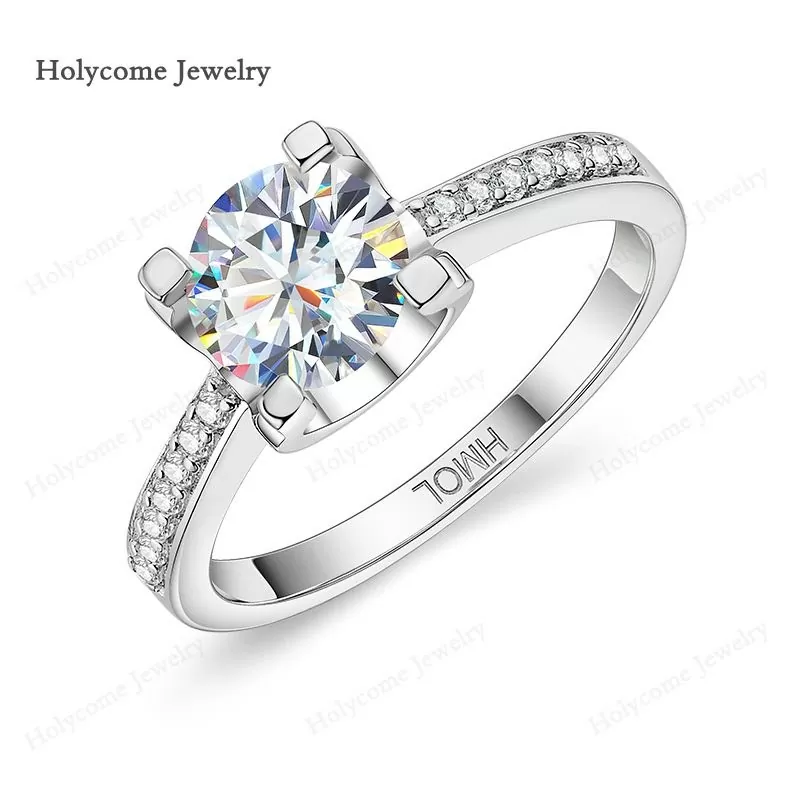
CAD Approval for Custom Engagement Rings
A buyer in Chicago sent back a CAD file four times on a single halo ring. On the fifth approval the ring was cast, set and shipped, and the customer said it looked exactly like the drawing. The four rejections were not wasted time. They were the cheapest part of the job.
The alternative is common and expensive: approve a drawing that looks right on a screen, then discover at delivery that the band is too thin for the stone, the gallery sits too high, or the halo reads as a separate ring around the centre. At that point the fix is a recast, not a revision.
[1]Why CAD approval is a purchasing decision
A CAD file is the last point where changes cost almost nothing. After casting, every geometry change carries metal, labour and a new setting pass. Treating approval as a formality moves the cost of your decisions to the most expensive stage of the job.
For a wholesale buyer running the same design across sizes, the CAD is also a production document. It fixes the wall thickness, the prong count and the gallery height for every unit that follows, so a mistake in the file is a mistake in the run rather than in one ring.
[2]What the drawing must show
A render is not a specification. Ask for four views: front, side, top and a section through the centre line. The side and section views are where most problems are visible, and they are the two that buyers most often skip.
Stone position and girdle clearance
The section view should show the pavilion of the centre stone and the metal that passes beneath it. What matters is the gap between the girdle and the seat: too little and the stone sits on the metal with no light beneath it, too much and the prongs have to reach, which makes them long and easy to catch.
On a 1 ct round stone, the pavilion depth is roughly 60 percent of the diameter. A drawing that shows a shallow seat usually means the gallery has been pushed up to compensate, and the ring will sit tall on the finger.
Wall thickness and comfort
Band thickness is where buyers optimise for price without seeing the consequence. A 1.2 mm wall on a 6 mm band saves metal and feels acceptable in a photo. After six months of daily wear it shows dents on the underside, and the ring cannot be resized without thinning further.
The working range for a ring that will be resized at least once is 1.5 to 1.8 mm at the bottom of the shank, tapering to 2.0 to 2.2 mm at the shoulders where the setting loads the band. A drawing that keeps a constant wall through the whole shank is easier to cast and harder to wear.
A buyer who wants a lighter ring can keep the visible profile and hollow the interior, which removes weight without thinning the outer wall. That requires a castable interior rather than a solid shank, so it has to be decided at the file stage and not after the first sample.
Prong seats and melee channels
Every prong needs a seat cut to the stone's girdle, not a generic cup. On the drawing this appears as a short arc at the tip of each prong; on a finished ring, a missing seat shows as a stone sitting high with visible metal beneath it.
Melee channels need a stated depth and a stated stone size range. A channel drawn for 1.3 mm stones will not hold a 1.5 mm parcel without re-cutting, and the result is either a loose line or a squeezed one.
[3]The three revisions that matter
Most approval cycles collapse into three substantive questions. Answering them in order avoids the loop where each round fixes one problem and creates another.
The first is proportion: does the centre stone dominate the band, or does the band carry it? The second is height: does the ring sit low enough to wear daily without catching? The third is finish: are the edges, the gallery and the underside detailed in a way the bench can execute consistently across 50 pieces?
Proportion
A useful test is the ratio of the centre stone's diameter to the band width at the shoulders. Between 2.5 and 3.5 to one, the stone reads as the subject of the ring. Below 2.5, the band starts to compete and the ring looks heavy. Above 3.5, the setting looks undersized and the stone appears to float.
Height
Ask for the total height from the bottom of the shank to the table of the centre stone. On a 1 ct round in a four-prong setting, 6.0 to 6.8 mm is a workable range for daily wear. Above 7.5 mm, the ring catches on pockets and gloves, and the gallery becomes a lever against the prongs.
Finish
The drawing should state where the ring is polished and where it is left matte or satin. A halo with a polished gallery and a satin shank is a deliberate design; the same ring polished everywhere reads as a stock piece, and the difference only appears after plating.
[4]A sign-off checklist
Six checks catch most CAD problems before they become casting problems. The table is the version we send with every custom file.
| Check | What to look for | Typical failure |
|---|---|---|
| Centre seat | Girdle gap 0.15-0.25 mm shown in section | Stone resting on metal, no light beneath |
| Wall thickness | 1.5-1.8 mm bottom, 2.0-2.2 mm shoulder | Thin shank that dents and cannot resize |
| Prong count | Four for rounds under 1 ct, six above | Four prongs on a 2 ct stone, visible girdle |
| Gallery height | Total height 6.0-6.8 mm for 1 ct | Ring sits high and catches on clothing |
| Melee channel | Stated stone size range and depth | Loose line after setting a larger parcel |
| Ring size | Stated in the file, with tolerance | Casting sized to a guessed measurement |
[5]Where the cost sits
A CAD revision is hours of modelling. A recast is metal, casting, polishing and a second setting pass, plus the delay. Across our bench, the average revision adds two to three days, while a recast after approval adds fifteen to twenty and consumes the original casting.
That asymmetry is why we build three approval rounds into the quotation rather than charging per revision. Buyers who use all three rounds usually end up with a file that runs cleanly at volume, and buyers who approve in one round often come back with a change request after the first sample.
[6]How we handle approval on volume orders
Every custom file goes through the same sequence: sketch, CAD, render approval, wax or resin trial where the design needs a fit check, then casting. The file is versioned, and the version that is approved is the version we cast from — not a later edit that never reached the buyer.
For orders above 200 pieces we send a cast sample from the approved file before the run, so the geometry is confirmed in metal rather than on screen. That sample is the buyer's reference for the incoming inspection as well.
Minimum order is 50 pieces per design, and sizes can be mixed within a design. Sample lead time is around 20 days from approved CAD, bulk 25 to 30 days after sample approval, or 15 to 20 days for stock designs under 500 pieces. Payment is a 30 percent deposit with the balance before shipment, by T/T, PayPal or Western Union. Volume pricing steps down at 200 and 500 pieces.
[7]Frequently Asked Questions
How many CAD revisions should I expect?
Two or three for most custom rings, and we include three rounds in the quote. A file that needs more than three usually has a brief problem rather than a modelling problem, and the fix is a written spec rather than another render.
Can I approve from a render alone?
For simple solitaires, yes. For halos, three-stone and rings with a shaped band, ask for a wax or resin trial. A render cannot tell you how the ring feels on the finger or whether the gallery presses the knuckle.
Who owns the CAD file after production?
The buyer does, for the design we produced together, and we keep a copy for reorders. We do not resell a customer's custom file to another account, which is the point of a bespoke programme rather than a catalogue one.
What if the casting does not match the approved file?
That is a defect, not a design change. We compare the cast against the approved dimensions before setting, and a piece outside tolerance is recast at our cost rather than shipped with an explanation.
[8]Next step
Send the stone size and the finger size you are building around, and we will return a first CAD within five working days with the section view attached. Start from our custom ring page, browse the archive for proportion references, or read the journal on setting styles before you commit to a file.