Journal / Colored Birthstone
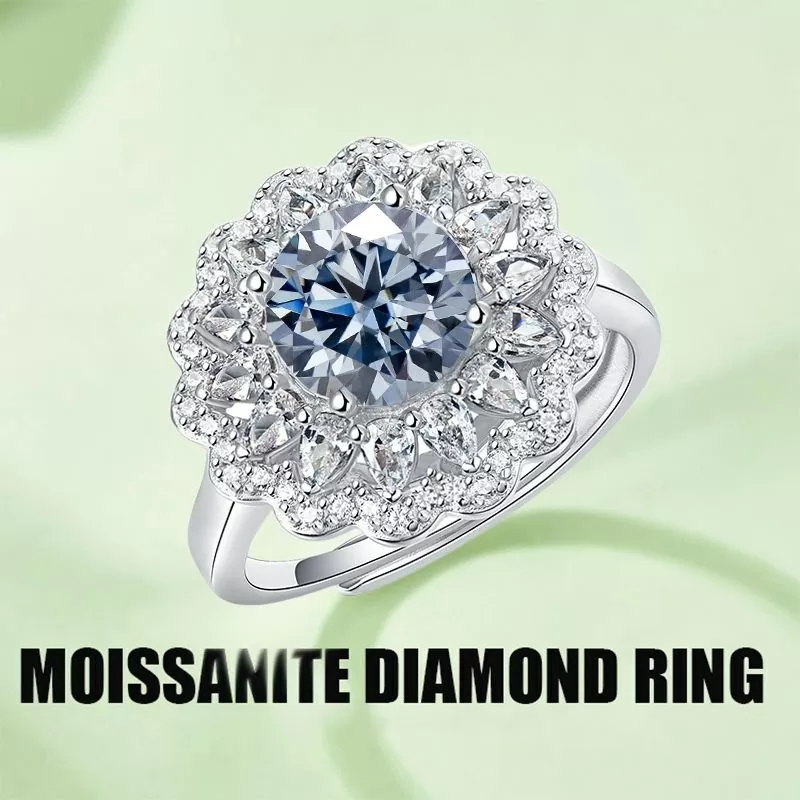
Birthstone Hardness and Setting Choice
A buyer in Austin ordered 40 emerald birthstone rings in a four-prong setting and had 11 back within a year with chipped girdles. The emeralds were fine. The setting exposed the one part of the stone that emerald cannot tolerate.
Birthstone choice is usually a sentiment decision. Setting choice is a durability decision, and the two have to be made together.
[1]Hardness is not toughness
Hardness is resistance to scratching. Toughness is resistance to breaking. A stone can be hard and brittle at the same time, and the birthstone list contains several examples.
Emerald is 7.5 to 8 on the hardness scale, which is respectable. Its toughness is poor because it is heavily included, and a prong that presses on the girdle can cleave a stone that would shrug off a scratch.
The three properties that matter
Hardness, toughness and cleavage. Cleavage is the direction in which a stone splits when struck, and a stone with perfect cleavage in one plane fails along that plane regardless of how hard it is.
| Stone | Hardness | Toughness | Setting risk |
|---|---|---|---|
| Diamond | 10 | Good | Cleavage on impact |
| Sapphire | 9 | Excellent | Low |
| Ruby | 9 | Good | Low, but brittle if fractured |
| Emerald | 7.5-8 | Poor | High at the girdle |
| Opal | 5.5-6.5 | Fragile | Very high |
| Pearl | 2.5-4.5 | Soft surface | Bezel only |
The table is the basis for every setting decision in this category. A stone at the bottom of the table cannot be held the way a stone at the top can.
[2]Setting by stone
Four setting types cover the birthstone range, and each maps to a group of stones rather than to a single stone.
Prong settings
Prongs expose the stone to light and show the girdle. That works for sapphire, ruby and diamond, and it is the wrong choice for emerald, opal and pearl. A prong on an emerald concentrates pressure on a girdle that is already included.
Bezel settings
A bezel covers the girdle with a metal wall and removes the impact risk. It is the default for softer stones, and it also suits stones with a low refractive index, because the metal edge gives the stone a defined outline.
Halo and cluster settings
A halo surrounds the centre with melee, which protects the girdle from direct impact but adds many small seats that can loosen. It works well for sapphire and ruby and is risky for opal, where heat from the setting bench can damage the stone.
Channel and gypsy settings
These set the stone into the metal rather than on top of it, which is the safest arrangement for a stone that will be worn hard. A gypsy setting on a band is the practical answer for a birthstone ring worn by someone who works with their hands.
[3]Pearl and opal in rings
Both belong in the birthstone list and neither belongs in a ring worn daily. Pearl is 2.5 to 4.5 on the hardness scale and its surface is a layered nacre that scratches with a fingernail. Opal is 5.5 to 6.5, porous, water bearing and heat sensitive.
A pearl ring works as an occasional piece with a bezel or a half bezel that covers the exposed side. An opal ring works as an occasional piece with a bezel and a protective doublet or triplet construction.
What a protective construction costs
A triplet opal has a clear cap over the colour layer, which raises the effective hardness and reduces the risk of crazing. The trade-off is that a triplet is a manufactured stone rather than a solid one, and it should be described as such.
The wear level question
The single question that decides the setting is how many hours a week the ring will be worn and whether the hands are in water. A birthstone ring worn on weekends tolerates a prong setting that the same ring worn in a kitchen does not.
[4]Birthstones by month and durability
The list below is the practical version: the common stone for each month and the setting we default to. It is not a grading chart, and it is not a recommendation to avoid any stone.
| Month | Common stone | Default setting |
|---|---|---|
| January | Garnet | Bezel |
| February | Amethyst | Bezel |
| March | Aquamarine | Prong |
| May | Emerald | Bezel |
| June | Pearl, moonstone | Bezel, occasional wear |
| September | Sapphire | Prong |
| October | Opal, tourmaline | Bezel, occasional wear |
Garnet and amethyst sit at 6.5 to 7, which is enough for a ring but not enough for a prong setting on a hand that works. Aquamarine is harder than both and still brittle, which is why it takes prongs but not impact.
[5]What the birthstone month does not tell you
A birthstone is assigned by month, and the list contains stones with very different durability. Two customers born in the same month can end up with rings that behave completely differently depending on which stone they chose.
October is the clearest example: opal and tourmaline share the month, and both are soft, while a diamond alternative for the same month is not. The month is a sentiment, and the stone is an engineering choice.
The substitution conversation
Where the birthstone is too soft for the intended wear, the honest options are a bezel setting, a smaller stone, a different stone for the same month or a different item such as a pendant. All four preserve the sentiment without promising durability the stone cannot deliver.
[6]Design rules that reduce risk
Four rules cover most of the risk in this category, and all four are cheap at the CAD stage.
Set the stone low rather than high, so the girdle sits inside the metal. Give the stone a metal edge of at least 0.3 mm on every side. Avoid side stones that leave the centre exposed to impact. And choose a shank that will not flex, because a flexing shank transfers load to the setting.
The low set question
A low setting hides part of the stone, which reduces the visible face. Buyers often resist it for that reason, and it is the single most effective change for a soft stone. A compromise is a low bezel with a raised crown, which keeps the face visible and the girdle protected.
[7]What we specify
We ask for the stone, the size, the intended wear level and whether the ring will be worn daily. From those we recommend a setting and state the risk in writing, so the buyer is choosing a known trade-off rather than discovering one.
For emerald and opal we default to a bezel unless the buyer specifically wants prongs and accepts the risk. For sapphire and ruby we default to prongs and quote a bezel as an alternative.
[8]Cost
A bezel costs slightly more than a prong setting because it is made to the stone rather than around it. The difference is usually smaller than the cost of replacing one chipped stone.
Minimum order is 50 pieces per design and sizes can be mixed. Sample lead time is around 20 days from approved CAD, bulk 25 to 30 days, and stock designs ship in 15 to 20 days under 500 pieces. Payment is a 30 percent deposit with the balance before shipment, by T/T, PayPal or Western Union, with volume pricing at 200 and 500 pieces.
[9]What a birthstone ring should not promise
A birthstone ring should not promise that the stone will look the same in five years. Emerald can lose its filling, opal can craze, and amethyst can fade in sunlight.
Those are material behaviours rather than defects, and a buyer who is told about them at the sale does not treat them as a quality failure. A buyer who is not told treats the first change as a return.
The honest presentation is the stone, the setting and the one behaviour to expect. Three lines are enough, and they convert a future complaint into a known characteristic.
[10]Frequently Asked Questions
Can an emerald be set in prongs?
Yes, and it carries real risk. Emerald is included and brittle, so a prong pressing on the girdle can chip it. A bezel or a halo with a protective edge is the safer choice.
Is opal suitable for a daily ring?
Rarely. Opal is soft, porous and heat sensitive, so it belongs in a pendant or an occasional ring rather than in a ring worn every day.
Which birthstone is the most durable?
Sapphire and ruby at 9 on the hardness scale with good toughness. Diamond is harder but has cleavage, so it fails on impact rather than on wear.
Does a bezel hide the stone?
It covers the girdle, not the face. A bezel of 0.3 to 0.5 mm wall leaves the table and crown fully visible and adds a defined outline.
[11]Next step
Send the stone, the size and how the ring will be worn, and we will recommend a setting and state the risk. See coloured stone rings in the archive, read the journal on colour grading, or open a brief on the contact page.