Journal / Custom Engagement Rings
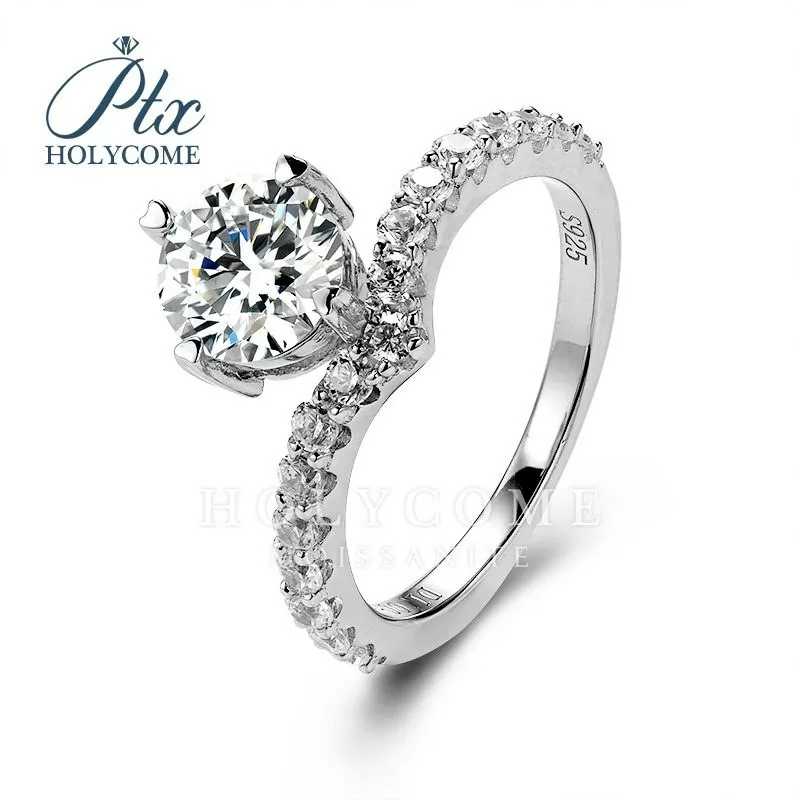
Bezel Set Engagement Ring Trade Offs
A buyer in Portland replaced a four prong setting with a bezel after two chipped stones in three years. The ring lost visible face and stopped losing stones, which is the trade a bezel asks for.
A bezel is a metal wall around the girdle. It removes the impact risk and removes the light that a prong setting lets in from the side.
[1]What a bezel does
The wall covers the girdle, which is the thinnest part of the stone and the part that chips. It also holds the stone with continuous contact rather than four points, so the seat cannot loosen asymmetrically.
The cost is visible face. A 0.4 mm wall on a 6.5 mm stone hides about 12 percent of the diameter, and the crown still reads full.
| Wall | Face hidden | Protection | Use |
|---|---|---|---|
| 0.3 mm | 9% | Moderate | Hard stones, daily wear |
| 0.4 mm | 12% | Good | Default for daily rings |
| 0.6 mm | 18% | High | Soft or brittle stones |
| 0.8 mm | 24% | Very high | Opal, pearl, emerald |
Below 0.3 mm the wall deforms when the stone is set, and the seat loses its circularity. Above 0.8 mm the piece reads as a metal frame rather than a stone.
[2]Seat depth
The seat is the shelf the pavilion sits on, and its depth decides how much of the stone is inside the metal. A seat at 55 percent of the stone's total depth holds the stone securely and leaves the crown visible.
A seat at 70 percent buries the stone and kills the brightness. A seat at 40 percent exposes the girdle below the wall, which is the failure the bezel was meant to prevent.
Why the seat has to be cut per stone
A bezel cut to a nominal size holds one stone well and a stone 0.2 mm smaller badly. On a run of 50 pieces, the bezel should be cut to the parcel's measured diameters rather than to a nominal.
[3]Where a bezel beats prongs
Four cases: emerald, opal, a stone worn daily by someone who works with their hands, and any stone above 2 ct in a ring that will be worn under gloves.
In each of those the prong setting's exposure is a liability rather than a benefit, and the visible face lost is smaller than the risk removed.
Where prongs still win
A diamond or moissanite above 1.5 ct in an occasional ring, because the side light is the point of the stone. A bezel on a well cut diamond hides the sparkle that the cut was bought for.
[4]The hybrid options
Three hybrids cover most of the middle ground: a half bezel that leaves the top and bottom open, a bezel with a scalloped edge that exposes part of the girdle, and a bezel with four prong tips that hold the crown.
A half bezel protects the sides and leaves the top open, which reads closer to a prong setting than a full bezel does. It is the usual answer for a buyer who wants protection without losing the face.
The scalloped edge
A scalloped bezel follows the stone's outline in arcs rather than a continuous wall, which exposes about 30 percent of the girdle. It protects less than a full bezel and reads lighter, which is the trade.
[5]What to specify
Four numbers: the wall thickness, the seat depth as a percentage, the stone's measured diameter, and the clearance between the wall and the stone at the top edge.
A clearance of zero means the stone is pressed in and the wall is stressed. A clearance of 0.05 mm lets the stone seat without load, and it is the difference between a bezel that holds for ten years and one that cracks at the wall.
[6]What we do
We cut the bezel to the parcel's measured diameters rather than to a nominal, quote the wall thickness in the CAD, and state the face loss on the approval sheet so the buyer sees the trade before approving.
Minimum order is 50 pieces per design and sizes can be mixed. Sample lead time is around 20 days from approved CAD, bulk 25 to 30 days, and stock designs ship in 15 to 20 days under 500 pieces. Payment is a 30 percent deposit with the balance before shipment, by T/T, PayPal or Western Union, with volume pricing at 200 and 500 pieces.
[7]Cost and rework risk
A bezel costs more than a prong setting at the same stone because the wall is made to the stone's measured outline rather than around it. The difference is usually 8 to 15 percent of the setting cost.
The rework risk is lower, because a bezel either seats the stone or does not. A prong setting can pass inspection with one prong loose and return three months later, which is a cost that does not appear in the quote.
On a 500 piece run the bezel's higher unit cost is usually offset by a lower return rate, and the offset is visible only if the buyer tracks returns by setting type.
[8]The wall and a later re-size
A bezel complicates a re-size, because the wall sits where the shank has to be cut. A one size change is usually possible at the bottom of the shank, away from the bezel.
A two size change on a bezel set ring usually needs a new shank rather than a re-size, because the metal has to be added where the wall is. That is worth stating at the quote rather than at the re-size.
[9]Inspection points on a bezel
Four checks: the wall thickness at four points around the stone, the clearance at the top edge, the seat contact under the pavilion, and the polish inside the wall.
A wall that measures 0.4 mm at the top and 0.25 mm at the bottom will fail at the bottom first, and the failure is invisible from the top. Measuring four points is the only way to catch it.
The polish inside the wall matters because a rough wall traps cleaning fluid and shows as a dark line under the stone after a year of wear.
[10]When a bezel should be refused
Three cases: a stone with an irregular girdle that cannot seat in a circular wall, a stone above 4 ct where the wall would need to be 1 mm to hold, and a design where the buyer wants the girdle visible.
In each case a prong or a half bezel is the honest answer, and a factory that quotes a full bezel anyway is quoting a piece it cannot make well.
[11]The bezel and a coloured stone
A coloured stone usually gains from a bezel, because the metal edge gives the colour a defined boundary and the stone reads more saturated against a dark wall.
The exception is a pale stone, where the wall reflects its own colour into the stone and shifts it. A pale aquamarine in a yellow bezel reads greenish, which is a reason to use white metal for pale stones.
We quote the metal colour against the stone's tone rather than against the design's metal, because the wall is close enough to the stone to change its appearance.
[12]What a bezel does to cleaning
A bezel traps less dirt than a prong setting because there are no gaps, and it traps more at the top edge where the wall meets the crown. That edge is the one place the buyer has to clean.
A soft brush at a 45 degree angle along the wall clears the edge in ten seconds. A brush pressed straight down pushes dirt into the clearance gap, which is the opposite of cleaning.
A bezel with a 0.05 mm clearance collects a film that shows as a grey line, and a steam clean every few months removes it without touching the stone.
[13]Frequently Asked Questions
Does a bezel make a diamond look smaller?
It hides about 12 percent of the diameter at a 0.4 mm wall. The crown stays visible, so the stone reads slightly smaller rather than dull.
Is a bezel safer than prongs?
Yes for impact and snagging, because the girdle is covered. It is not safer for light, which is the trade a bezel makes.
How thick should a bezel wall be?
0.4 mm for a daily ring, 0.6 mm for a soft stone, and never below 0.3 mm because the wall deforms when the stone is pressed in.
Can a bezel be re-cut if the stone is replaced?
Only if the replacement has the same diameter or smaller. A larger stone needs a new bezel, and the wall has to be cut again from the new measurement.
[14]Next step
Send the stone's measured diameter and the wear pattern, and we will quote a wall thickness and the face loss. See bezel work in the archive, read the journal on prong types, or open a brief on the contact page.